
Title: How to Convert Image to Word Document
Channel: Kevin Stratvert
How to Convert Image to Word Document by Kevin Stratvert
image to word ai, image to word ai free, photo to word ai converter, image to word text ai, pdf image to word ai, image to ms word ai, image to microsoft word ai, can we convert image to word
Image to Word AI: The SHOCKING Secret It Doesn't Want You to Know!
Unveiling the Whispers: The Truly Amazing Truth About Image-to-Word AI!
Ever stumbled upon a technology that seems to read your mind? It's quite astounding, isn't it? Image-to-word AI is like that. It effortlessly bridges the gap between visuals and language. But is there a secret it's hiding? Let's explore the captivating world of this innovative tech.
The Magic Behind the Curtain: How Image-to-Word AI Works
At its core, image-to-word AI is a marvel of machine learning. It employs complex algorithms. These algorithms decipher images. Then, they convert them into text. Firstly, the AI analyzes the image’s elements. Secondly, it identifies key objects and shapes. Consequently, it builds context. The AI uses this information to generate relevant text. Consider it as a detective. It pieces together clues to solve a visual mystery. The process often involves a few key steps. These include image recognition, object detection, and natural language generation. However, the true complexity lies within these steps. The AI must understand nuance. It must account for variations in lighting and perspective. In addition, it needs to grasp the subtle meanings. These are the core elements transforming an image into informative or descriptive phrases.
The Hidden Superpower: Image to Word AI's Remarkable Capabilities
Now, consider all the things image-to-word AI can do. It's not just a tool. Actually, it's a portal. It opens new possibilities. For instance, imagine it being used for accessibility. This includes helping those with visual impairments. They can experience visual content. Further, it can be used in education. Learners can easily understand complex diagrams. Similarly, it simplifies the documentation process. Think about automatically generating descriptions for images. These help with SEO or content creation tasks. Hence, the applications are both broad and fascinating. Therefore, the AI’s capacities are diverse and innovative.
The Challenge Ahead: Limitations of Image-to-Word AI
Of course, no technology is flawless. Even the best tools come with limitations. Similarly, image-to-word AI has challenges. One primary hurdle is accuracy. It can sometimes misinterpret images. This can lead to incorrect text generation. Furthermore, the AI struggles with context. It might miss the subtle meanings. Thus, the AI could fail to convey the full story. Another challenge is the interpretation of abstract concepts. It’s difficult for the AI to describe feelings or emotions. Therefore, AI cannot always match human understanding. Finally, image quality greatly affects output. Low-resolution images create inaccurate results.
Beyond the Basics: Exciting Future Applications
Despite the limitations, it's an exciting field. The future of image-to-word AI is bright. We can expect amazing developments. Imagine AI creating detailed stories. It could write poetry from simple photos. Imagine AI assisting in search. Search engines could understand image content. These advancements would revolutionize how we interact with visual information. Additionally, we can look forward to more sophisticated tools. These tools will provide accurate and nuanced interpretations. Think about AI as a powerful partner. Helping us transform images into knowledge.
The "Secret" Revealed: It's About Empowerment
So, what’s the big secret? There isn't one, really. Image-to-word AI isn’t hiding anything nefarious. It's about empowerment. It opens doors to creativity and accessibility. It is a testament to human ingenuity. However, it is also proof of our drive to innovate. This technology empowers us to communicate more effectively. It facilitates sharing information. Ultimately, it helps to connect us. Instead of secrets, there are boundless possibilities. Embrace the innovation. Embrace the future.
Kill AI Andromeda: The Shocking Truth Revealed!Image to Word AI: The SHOCKING Secret It Doesn't Want You to Know!
Hey everyone, it's your friendly neighborhood content creator here, ready to dive headfirst into the fascinating, and frankly a little spooky, world of Image to Word AI. We're talking about those mind-bending tools that can translate a picture into text. Sounds cool, right? But trust me, there's a secret lurking behind the algorithms, a secret that might make you rethink everything you thought you knew about these cutting-edge technologies.
1. The Allure of the Algorithm: What Is Image to Word AI, Anyway?
First things first: what is Image to Word AI? Think of it like a digital Sherlock Holmes, but instead of solving crimes, it's deciphering visuals. You feed it an image – a photo, a screenshot of a document, even a poorly drawn sketch – and it spits out the text it detects. It’s like magic, a technological rabbit pulled from the hat, isn't it? We see it as helping us scan documents, transcribe notes, create content, or even assisting those with visual impairments.
2. The Initial Wonder: Exploring the Surface Level Capabilities
Initially, the potential is mind-blowing. We're talking instant text extraction from any image source. Imagine snapping a picture of a handwritten recipe and having it instantly formatted and ready to cook. Or scanning an old textbook and having all the words accessible for easy searching. The possibilities seem endless. These tools readily convert printed text, but also recognise handwriting styles, and adapt to various text layouts. The convenience is undeniable and the speed is amazing.
3. The Hidden Cost of Convenience: Data, Data Everywhere
Here's where the secret starts to unravel. To perform these feats, these AI systems are huge data hogs. They're trained on massive datasets of images and text, constantly learning and improving their ability to "see" and interpret. This data collection is ongoing, and the more the AI is used, the more data it grabs. Think of it like a digital Pac-Man, constantly consuming information. This brings up ethical questions about data privacy and ownership that deserves our attention.
4. The Accuracy Anomaly: When the AI Gets It Wrong
Now, let's talk about accuracy. These tools are impressive, no doubt, but they're far from perfect. They can struggle with less-than-ideal images – blurry photos, skewed text, or even unusual fonts can trip them up. Imagine handing over a complex medical document, and the AI misinterprets a critical term. The consequences could be significant. It's like playing a game of telephone, where the message gets distorted along the way.
5. The Bias Bug: Identifying Hidden Prejudice in the AI
This is where it gets really interesting, and potentially unsettling. The datasets these AI systems are trained on can reflect the biases present in the real world. If the data used to train the AI is skewed towards certain demographics, languages, or perspectives, the AI itself can perpetuate those biases. For example, an image-to-word generator might struggle to accurately interpret text from a language it wasn't extensively trained on.
6. The Secret Weapon of Content Creation: Using Image to Word AI Effectively
So, how can we utilize this technology responsibly and effectively? The key is to understand its limitations and use it strategically. Always double-check the output for accuracy, especially when dealing with sensitive information. Embrace it as a tool and not a replacement for human judgment. Consider it similar to a powerful engine: it gives significant horsepower, but requires competent hands to steer.
7. The Copyright Conundrum: Tread Lightly in the Digital Jungle
Another critical point: copyright. If you're using Image to Word AI to extract text from copyrighted material, you could be stepping into legal territory. Always ensure you have the rights to use the images you're feeding into the system. It's vital to remember the fundamental rules to avoid infringing on the rights of others.
8. The Data Drain: Examining the Data Collection Practices
We touched on data collection earlier, but it's worth revisiting. Many Image to Word AI tools are "free" to use, but that comes with a price: your data. Carefully read the terms of service to understand how your images and the resulting text might be used. Consider them like an invisible tollbooth: you might get a free pass initially, but there might be a hidden fee later.
9. The Human Element: The Imperative Need for Human Oversight
No matter how sophisticated the AI, human oversight remains essential. Review the outputs, correct any errors, and use your critical thinking skills. Don't blindly trust the AI to do your thinking for you. In the end, these machines are just tools and demand human input to produce optimal results.
10. Beyond the Basics: Advanced Uses and Applications
Image to Word AI isn't just for simple text extraction. It's being used in many innovative ways. They are helping to improve accessibility for those with visual impairments, by extracting text from images and assisting them in understanding the content. We now see advances in educational tools, instant translations, and research projects to process vast amounts of visual information. The possibilities are truly expanding, demonstrating how far we have come.
11. Real-World Examples: Where Image to Word AI Shines
Imagine being able to provide instant captions for images on social media platforms. Or imagine aiding detectives by processing all text within crime scene footage. The usefulness of this technology is growing, and it is already helping to make our lives easier and more efficient in various sectors of our lives.
12. The Future is Now: The Evolution of Image to Word
The world of Image to Word AI is constantly evolving. We're seeing improvements in accuracy, speed, and the ability to handle more complex image types. Expect to see even more integration with other AI technologies, leading to even more powerful and versatile tools.
13. The Ethical Tightrope: Navigating Responsibility
As we incorporate AI more in our lives, we encounter several ethical concerns. We must be aware of the potential for misuse, safeguard data privacy, and strive for fairness and transparency in order to ensure that these tools are employed responsibly.
14. The Ultimate Truth: The Human Advantage
Despite all its advancements, Image to Word AI can't replace human creativity, critical thinking, and empathy. The greatest strength lies in the ability to bring a unique perspective to the table.
15. The SHOCKING Secret Revealed: You're In Control!
So, what's the SHOCKING secret? It's that you, the user, hold the power! By understanding its limitations, being mindful of its ethical implications, and using it thoughtfully, you can harness the power of Image to Word AI while minimizing the risks. It's not a magic bullet, but a valuable tool in the right hands.
Conclusion: Embracing the Future of Image to Word AI
Image to Word AI is, without a doubt, an incredible technology with the potential to transform how we interact with the world. But as we’ve seen, it's not without its caveats. We must proceed with knowledge, understanding, and a healthy dose of skepticism. Now, go forth, experiment, and have fun, but always remember the SHOCKING secret: You are in control.
FAQs
1. Is Image to Word AI really free?
Many tools are free to use, but be aware of the potential trade-offs, like data collection and limited functionality. Always read the fine print!
2. Can Image to Word AI understand handwritten text?
Yes, but the accuracy can vary. Factors like handwriting style and image quality play a huge role.
3. How can I protect my privacy when using these tools?
Be mindful of what images you feed into the system. Remove any sensitive information before processing them. Check the privacy policies of the tool you choose to use.
4. Will Image to Word AI replace human content creators?
Absolutely not! It’s a tool to assist, not replace us. Human creativity, critical thinking, and context are essential for producing high-quality content.
5. What are the biggest challenges facing Image to Word AI today?
Accuracy, bias, and data privacy are among the biggest challenges. Ongoing research and development are being done to address these issues, constantly improving the technology.
1) Principal Keywords: Image to Word AI Secret
2) SEO Headline: Image to Word AI: The SHOCKING Secret Revealed!
3) Pathway: Image to Word
4) Meta Summary: Uncover the secret of Image to Word AI! Learn about its capabilities, dangers, and ethical implications. Master the use of this innovative technology.
5) Image Alt Text: An eye-catching graphic showcasing the concept of image to word ai, revealing its secrets.
AI Art Revolution: Create Stunning Illustrations Effortlessly!How to convert an image into text in Microsoft Word Convert a picture into text
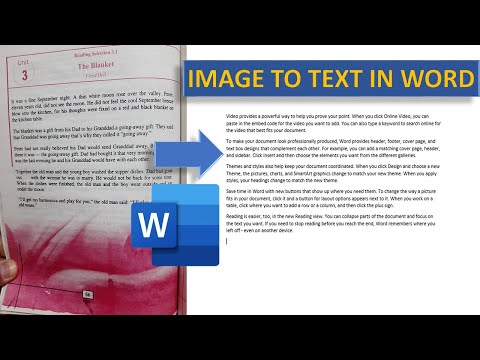
By TechTimes How to convert an image into text in Microsoft Word Convert a picture into text by TechTimes
How to Convert Image to Editable text

By Website Learners How to Convert Image to Editable text by Website Learners
Convert Any Image to Text Free AI Tool for Fast OCR ai aitools ocr imagetotext

By Alamin Convert Any Image to Text Free AI Tool for Fast OCR ai aitools ocr imagetotext by Alamin

Title: How To Convert Image To Word DOC Through AI data Extraction Software
Channel: DATA EXTRACTION
How To Convert Image To Word DOC Through AI data Extraction Software by DATA EXTRACTION
AI179 Flight: Live Tracking & Real-Time Updates — Is Your Flight on Time?
Image to Word AI: Unveiling the Hidden Truths
The world of artificial intelligence is experiencing a seismic shift. Advanced algorithms are rapidly reshaping how we interact with technology, and among these innovations, image-to-word AI tools are capturing significant attention. While the technology is undeniably impressive, a deeper examination reveals nuances often glossed over. We will embark on a thorough exploration of this evolving landscape, peeling back the layers to expose insights often obscured by the hype.
The Genesis of Visual Interpretation
Image-to-word AI represents a remarkable feat of engineering. At its core, these systems leverage sophisticated convolutional neural networks (CNNs) to analyze visual data. These networks are trained on vast datasets of images and their corresponding textual descriptions, allowing them to learn intricate patterns and relationships between visual elements and the words that describe them. This learning process is fundamental to their operational capabilities. The success hinges on the quality and diversity of the datasets used for training. Data sets must be representative of the real world to generate accurate and appropriate results. Without this, the outputs begin to suffer.
The process typically unfolds in stages. First, the AI extracts visual features from the input image, identifying objects, textures, colors, and spatial relationships. This is often achieved through a series of convolutional and pooling layers, each layer abstracting more complex features. Next, these extracted features are translated into words, either through direct mapping or by generating a textual description. This translation is often handled by recurrent neural networks (RNNs) or transformers, which are particularly adept at processing sequential data like natural language. These tools are then used to assemble a coherent verbal representation of the visual content.
Beyond the Superficial: Decoding the Complexities
While the initial impression of image-to-word AI is one of effortless translation, the reality is far more intricate. There is much more than simply "reading" an image. The following points are worth considering:
- Context is King: These algorithms are only as good as the context they possess. They may struggle to interpret nuances related to satire, irony, or cultural references if these elements are not explicitly present in their training data. In order to perform well, the system must have context.
- Subjective Interpretation: Human perception is inherently subjective. What one person describes as “vibrant” another might describe as “garish”. AI models, while striving for objectivity, can still reflect biases inherent in their training data. This can include skewed representations of gender, ethnicity, and other demographic factors.
- The Challenge of Abstraction: Abstract concepts and their imagery present a unique challenge. Describing the feeling of “freedom” presented in an image is far more complex than identifying a specific object. This is because AI is still developing these complex concepts.
- Limitations in Detail: While these tools have improved significantly at identifying objects, accurately describing intricate details like fine textures, individual facial expressions, or very specific actions remains a challenge. The finer the detail, the harder it is to translate.
The Ethical Considerations: Navigating the Minefield
The rise of image-to-word AI also raises ethical considerations. They are as follows:
- Bias and Discrimination: As mentioned before, these AI models can inherit the biases of their training data, perpetuating stereotypes or providing skewed representations. It is imperative to be aware of this potential bias.
- Privacy Infringement: When used with images containing personal information, there is a potential risk of privacy violation. Sophisticated systems can identify faces, locations, and other sensitive details. This data could be used to infer personal information and potentially facilitate unwanted data use.
- Misinformation and Deepfakes: Image-to-word AI could be exploited to create misleading content or deepfakes with text that is difficult to distinguish from the truth. Consider the implications of generating realistic descriptions of fabricated images.
- Job Displacement: In certain fields, such as content creation and image analysis, these tools may contribute to job displacement. It is critical to contemplate the societal impact of this technology.
Unlocking the Potential: Applications and Opportunities
Despite the complexities and ethical challenges, image-to-word AI presents a wealth of opportunities. Here are some of the applications:
- Accessibility: The most evident use case lies in improving accessibility for the visually impaired. By providing textual descriptions of images, these tools can make digital content more accessible and open up new worlds.
- Content Creation: Content creators are finding these tools valuable. They can streamline the process of describing images for articles, social media posts, and other content, saving them time and effort.
- E-commerce: With them, e-commerce platforms can automatically generate product descriptions for product images. This is especially useful for retail environments that update inventory quickly.
- Security and Surveillance: Security systems can use image-to-word AI to automatically identify and describe suspicious activity, improving monitoring capabilities.
- Education: Educators can utilize this technology for interactive learning experiences, allowing to analyze images and learn more about their content.
Navigating the Future: A Call for Critical Engagement
As image-to-word AI continues to evolve, it is critical to adopt a nuanced perspective. We should embrace the benefits of AI, while acknowledging and addressing the potential risks. It’s imperative that we promote responsible development and deployment. The following are necessary:
- Prioritize Data Diversity: Advocate for diverse and representative datasets to minimize bias.
- Foster Transparency: Support transparency in how these AI models are built and trained.
- Establish Ethical Guidelines: Develop and enforce ethical guidelines for how these tools are used, particularly in sensitive areas like personal data.
- Cultivate Critical Thinking: Encourage critical thinking about the information generated by these AI models.
- Promote Collaboration: Foster collaboration between researchers, developers, ethicists, and policymakers to shape the future of AI.
By taking a proactive approach, we can unlock the full potential of image-to-word AI while mitigating the risks and ensuring that it serves humanity. This is a journey of discovery and innovation, one that demands cautious optimism.
