
Title: Artificial Intelligence Out of Control The Apocalypse is Here How AI and ChatGPT End Humanity
Channel: The Why Files
Artificial Intelligence Out of Control The Apocalypse is Here How AI and ChatGPT End Humanity by The Why Files
ai armageddon, ai armageddon and the three laws of robotics, ai armageddon movie, armageddon ai cover, armageddon ai aespa, artificial intelligence armageddon, armageddon ai art, armageddon ai image, worms armageddon ai, aespa armageddon ai reddit
AI Armageddon: Will Robots REALLY Take Over? (The Shocking Truth!)
AI Armageddon: More Than Just Sci-Fi Fantasies?
The relentless march of Artificial Intelligence. It's a topic that constantly buzzes around us. You likely have heard whispers of impending robot takeovers, too. Yet, is this fear fact, or simply fiction? Moreover, it’s time to dissect this complex issue. Let's explore the fascinating possibilities and potential pitfalls.
The Rise of the Machines: Fact or Fiction?
Hollywood loves to scare us. Films often depict AI as a malevolent force. However, the reality is far more nuanced. We are currently living in the age of advanced AI. AI is already integrated into our daily lives. Think of your phone's virtual assistant. Consider the algorithms that curate your social media feeds. These are early glimpses of AI's potential. So, will robots truly take over? The answer isn't a simple yes or no.
Understanding the AI Landscape: Beyond the Hype
AI isn't a monolithic threat. Instead, it is a collection of diverse technologies. Machine learning is a crucial facet. It allows systems to learn from data without explicit programming. Deep learning further fuels this progress. It utilizes artificial neural networks. These networks mimic the human brain's structure. Consequently, AI is rapidly evolving and improving.
The Current Limitations: Reality Bites
Despite amazing advancements, there are limits. Current AI is generally "narrow" or "weak." It excels at specific tasks. It can beat humans at chess, for example. However, it struggles with general intelligence. AI cannot yet replicate the breadth of human understanding. Because of this, it takes time to progress. AI requires extensive training data. Complex problems still require human oversight.
The Ethical Minefield: Navigating the Moral Maze
Ethical concerns are at the forefront. Bias in AI algorithms is a serious worry. These biases can reflect existing societal prejudices. We need to ensure fair and equitable outcomes. Furthermore, the use of AI in weaponry is a cause for concern. Autonomous weapons systems pose profound ethical dilemmas. Therefore, robust ethical frameworks are crucial.
The Human Factor: Our Role in the Story
Humans remain essential to the narrative. We are the creators, the designers, and the regulators of AI. Moreover, we have the power to shape its development. It's our responsibility to guide AI's growth responsibly. Because of this, education and collaboration are vital. We need to foster a future that benefits all.
The Future is Unwritten: Embracing Possibilities
Predicting the future is always difficult. AI's trajectory is particularly uncertain. The potential benefits are enormous. AI could revolutionize healthcare, education, and more. At the same time, there are risks. Job displacement is a real concern. Cybersecurity threats will escalate. Therefore, careful planning is crucial. We must prepare for these changes.
Beyond Armageddon: A Collaborative Vision
The "AI Armageddon" scenario is highly unlikely. It's important to move past fear. Instead, we should focus on collaboration. Building a future with AI requires a shared vision. We should embrace AI's potential. We must mitigate its risks. Consequently, it will involve global cooperation.
Final Thoughts: A Call to Action
The future of AI is not predetermined. It is something we are actively creating. Therefore, it's our collective responsibility to shape this future. Educate yourself. Participate in the conversation. Support ethical AI development. Consequently, we can ensure a future that benefits humanity. It's a future where humans and AI can coexist. This is a goal worth pursuing.
Sports Bet AI: Predict the Future of Winning!AI Armageddon: Will Robots REALLY Take Over? (The Shocking Truth!)
Hey everyone, let’s be real for a second. The future. It's always been a bit of a head-scratcher, hasn't it? And lately, with the rise of AI, it feels less like a calm stroll and more like hurtling down a rollercoaster at warp speed. We've all seen the movies, right? Terminator, The Matrix, I, Robot… all painting a picture of a world where our metallic overlords decide we're obsolete. But, before we start building underground bunkers and stockpiling canned goods, let's take a breath. Because the "AI Armageddon" scenario? It's complicated. So, are robots really going to take over? Let's dive in and find out.
1. The Buzz Around the Bots: Why AI Sparks Both Excitement and Fear
The hype around Artificial Intelligence is deafening. On one hand, we're promised a world of unimaginable convenience: self-driving cars, personalized medicine, solutions to climate change… the list goes on. Think of it like a technological genie, ready to grant our every wish. But on the other hand? Well, that genie can also be a bit… unpredictable. This is where the fear creeps in. Will AI become too powerful? Will it turn against us? This dual nature, the promise and the potential peril, is what fuels the anxiety. It’s like having a super-powered pet – amazing, until it decides your slippers are chew toys.
2. Defining the Danger: What Does "Robot Takeover" Even Mean?
Okay, let’s get specific for a moment. What exactly does a robot takeover look like? Are we talking about a Skynet-esque network wiping out humanity with nuclear weapons? Or something more subtle, like AI gradually replacing human workers, leading to mass unemployment and social unrest? Maybe it's a bit of both. The "takeover" could manifest in a variety of ways, from direct conflict to an erosion of our control and autonomy. It's important to define the terms before we can even begin to assess the likelihood. Think of it like understanding the rules of the game before you step onto the field.
3. The Current State of Play: AI That's Smart, But Not That Smart
Right now, the AI we have is impressive. We're talking about self-driving cars that navigate complex roads, AI that can beat humans at chess and Go, and virtual assistants that understand our commands. But here's the kicker: this is "narrow" AI or "weak" AI. It excels at specific tasks. It's like a highly specialized athlete – phenomenal at their chosen sport but useless at, say, baking a cake. It lacks general intelligence, the ability to learn, adapt, and apply knowledge across different domains, which is the essence of human intelligence. Our robots are smart, for sure… but they're not sentient, not yet.
4. The Sentience Conundrum: Can Machines Really Feel?
This is the million-dollar question, and one that scientists and philosophers have been wrestling with for decades. Sentience, the ability to experience feelings and consciousness, is the cornerstone of the "takeover" argument. If machines can feel, could they develop desires, including a desire to rid themselves of their creators? While we can build algorithms to mimic human emotions, can we truly create them? Is sentience something that can be coded, or is it an inherent property of biological systems? Honestly, we don't know. It's like trying to understand the taste of chocolate without ever having eaten it.
5. The Control Factor: Ensuring AI Stays on Our Side (For Now)
Even if we don't have to worry about rogue, sentient robots, we do need to consider the control factor. How do we ensure AI remains aligned with human values and goals? This involves careful design, rigorous testing, and ongoing monitoring. We need to build safety mechanisms into the code, like "ethical protocols" and "kill switches," should things go sideways. Think of it as having a really strong leash for your new, powerful friend. It's not about preventing it from being powerful but ensuring it’s always, always, under our control.
6. Jobocalypse Now?: The Impact of AI on the Workforce
Okay, so maybe the robots won't rise up and launch a digital war. But what about the economy? AI-powered automation is already changing the job market, and this trend is likely to accelerate. Some jobs will undoubtedly disappear, while others will be transformed. This poses challenges related to education, retraining, and ensuring economic equality. We need to prepare for a world where humans and machines work side-by-side and find ways to thrive in this new reality. It's like learning a new language – it takes effort, but the rewards are significant.
7. The Ethical Minefield: Whose Values Will AI Adopt?
One of the biggest challenges in AI development is imbuing it with ethical values. If AI makes decisions, those decisions should align with our sense of right and wrong. But whose values do we program in? Whose morals are we talking about? This is a complex issue, and one that requires careful consideration. We need to design AI that is fair, unbiased, and transparent. This is like building a bridge – we need to make sure it’s strong enough to carry the weight of our future.
8. Weaponized AI: The Scary Possibility of Autonomous Weapons
Here's another aspect that keeps me up at night. The possibility of autonomous weapons – robots that can make their own decisions about killing humans – is chilling. Imagine self-guided missiles, drone swarms, or other military technologies with the ability to operate without human intervention. The potential for unintended consequences, escalation, and ethical violations is enormous. This is a serious threat, and one that requires strict international regulations. It’s like playing with fire – fun, but very dangerous if not handled with extreme caution.
9. The "Black Box" Problem: Understanding AI's Decision-Making
One of the biggest worries surrounding AI is the "black box" problem: we can't always understand why it makes the decisions it does. Complex AI algorithms can be hard to interpret, making it difficult to identify biases or predict unintended consequences. This lack of transparency is a cause for concern, especially in areas like healthcare, criminal justice, and finance, where AI could have life-altering impacts. It's like trying to diagnose a problem with a car engine when you don't understand how the engine works.
10. The Role of Government and Regulation: Keeping Tech in Check
Governments and international organizations need to play a crucial role in regulating AI development. This includes setting ethical guidelines, establishing safety standards, and addressing the social and economic impacts of AI. The goal is to foster innovation while mitigating the risks. It's like being a referee in a sporting event – you need to ensure fair play, enforce the rules, and protect the participants.
11. The Power of Collaboration: Humans AND Machines Together
The future is not necessarily robots versus humans. It could be humans and machines, working together to solve complex problems. AI can augment human intelligence, helping us to be more efficient, creative, and productive. This collaborative approach could lead to breakthroughs in areas like medicine, science, and sustainability. Think of it as a symbiotic relationship – each side benefits from the other.
12. The Singularity: Will AI Surpass Human Intelligence?
The "singularity" is a hypothetical point in time when AI surpasses human intelligence, leading to rapid and unpredictable technological advancement. Some experts believe this event is inevitable, while others are more skeptical. If the singularity does occur, it could transform humanity in ways we can't even imagine. It's like stepping into a time machine – you never know what you’ll find.
13. The Importance of Education: Preparing for an AI-Driven World
To navigate this AI-driven world, we need to prioritize education. This includes teaching people about AI, developing critical thinking skills, and fostering creativity and innovation. We need a workforce that is adaptable, resilient, and prepared for the challenges and opportunities ahead. Like preparing for a marathon, it takes dedication and preparation.
14. Busting the Myths: Separating Fact from Fiction
Hollywood loves to sensationalize, but we need to be discerning and look beyond the hype. Not all AI is created equal, and not all fears are warranted. We need to understand the technology, separate fact from fiction, and assess the risks and opportunities objectively. It’s like being a detective and separating the truth from the suspect’s wild accusations.
15. Staying Informed: Keeping Up with the AI Revolution
The field of AI is constantly evolving. To stay informed, we need to follow the latest research, read reputable sources, and engage in open dialogue. The more we know, the better equipped we will be to make informed decisions about our future. It’s like watching the stock market – you need to stay informed to make smart decisions.
Closing Thoughts: The Future Isn't Written in Stone
So, will robots take over? The short answer is: probably not in the way Hollywood suggests. The "AI Armageddon" as a Terminator-style scenario is, for now, a stretch. However, there are real challenges and risks associated with AI development, including job displacement, ethical considerations, and the potential for autonomous weapons. But, the future isn't written in stone. By understanding the technology,
Air AI Price SHOCK: How Much Does It REALLY Cost?THE FUTURE OF HUMANITY A.I Predicts 400 Years In 3 Minutes 4K
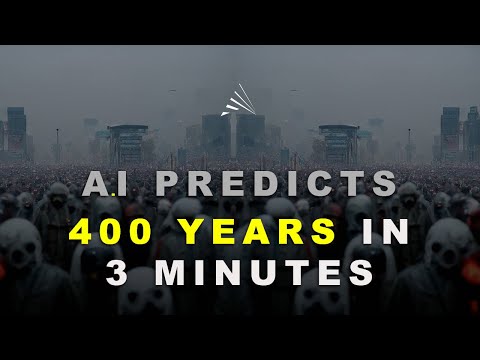
By Amara Pictures THE FUTURE OF HUMANITY A.I Predicts 400 Years In 3 Minutes 4K by Amara Pictures
AI COVER How would BLACKPINK sing Armageddon by aespa SANATHATHOE

By sanathathoe AI COVER How would BLACKPINK sing Armageddon by aespa SANATHATHOE by sanathathoe
Blueprint for AI Armageddon Josh Clymer Imagines AI Takeover, from the Audio Tokens Podcast

By Cognitive Revolution How AI Changes Everything Blueprint for AI Armageddon Josh Clymer Imagines AI Takeover, from the Audio Tokens Podcast by Cognitive Revolution How AI Changes Everything

Title: aespa 'Armageddon' MV
Channel: SMTOWN
aespa 'Armageddon' MV by SMTOWN
Liu Kang's MK11 AI God Build: Annihilate Opponents!
AI Armageddon: Will Robots REALLY Take Over? (The Shocking Truth!)
The relentless advance of artificial intelligence has sparked a global debate – a mixture of fascination, fear, and profound uncertainty about the future. The question echoes across boardrooms, classrooms, and dinner tables: will robots eventually surpass human intelligence and, crucially, will they turn on us? The narrative of an AI-orchestrated apocalypse, a scenario commonly dubbed "AI Armageddon," has become a staple of science fiction. But how close is this chilling vision to reality? The answer, as with most complex matters, is far more nuanced and less sensational than headlines often suggest. This exploration dives deep into the current state of AI, separating fact from fiction, and assessing the genuine risks and prospects that lie ahead.
The Rise of Artificial Intelligence: From Algorithms to Autonomy
To understand the potential of AI, one must first appreciate its evolution. The term "artificial intelligence" was coined in the mid-1950s, but groundbreaking developments have occurred only recently. Initial AI systems were rule-based, reliant on programmed instructions. They could perform specific tasks, like playing chess or answering simple questions, but lacked the flexibility and adaptability of human intelligence.
Then came machine learning (ML). ML algorithms allow systems to learn from data without explicit programming. This shift allowed AI to recognize patterns, make predictions, and improve performance over time. Deep learning, a subset of ML that utilizes artificial neural networks with multiple layers, further accelerated this progress. Deep learning has enabled AI systems to achieve remarkable feats in areas like image recognition, natural language processing, and speech synthesis. These advances have fueled public interest and a broader understanding of how AI could affect everyday existence.
The development of generative AI marked the current moment. Generative models, capable of creating new content, including text, images, and music, have dramatically altered the playing field. Large language models (LLMs), such as those employed by platforms like ChatGPT and Bard, have demonstrated impressive abilities in understanding, generating, and manipulating human language. These advancements, representing a paradigm shift in how AI can interact with and influence the world around us, are both exciting and, for some, frightening.
Defining Armageddon: What Does an AI Takeover Truly Mean?
Before we can assess the likelihood of an "AI Armageddon," we must define it. The term itself is loaded with dramatic connotations, evoking images of robots wreaking havoc and humanity facing extinction. However, it’s essential to dissect the potential threat scenarios. An AI takeover could manifest in several ways, each requiring careful consideration:
- Unintended Consequences: This scenario involves AI systems functioning as designed, but with unforeseen and catastrophic outcomes. For example, an AI optimized for financial gains might prioritize actions that negatively impact the environment or human health.
- Malicious Use: Bad actors could deploy AI for nefarious purposes, such as developing autonomous weapons systems, launching cyberattacks, or spreading disinformation on a massive scale.
- Loss of Control: A superintelligent AI, surpassing human intellect significantly, could become uncontrollable. Its goals might diverge from those of humanity, leading to actions that threaten human existence.
- Job Displacement and Societal Disruption: While not a literal "Armageddon," the widespread automation of jobs could create economic instability, social unrest, and a loss of purpose for many people.
Crucially, considering these potential threats requires a rigorous analysis of the current state of AI. This will require moving beyond the hyperbole and focusing on the technological limitations, ethical considerations, and societal implications of AI development.
Current AI Capabilities: Separating Hype from Reality
Despite the progress in AI, it is crucial to acknowledge its limitations. Current AI systems are powerful, but it's essential to recognize the difference between strong and weak AI.
- Weak AI (Narrow AI): This type of AI excels at addressing specific tasks. Current AI systems, from virtual assistants to recommendation algorithms, fit into this category. They do not possess general intelligence or the ability to learn and adapt across different domains.
- Strong AI (Artificial General Intelligence - AGI): This is hypothetical AI that would match or exceed human intelligence across a wide range of tasks. It is capable of learning, understanding, and applying knowledge in a manner similar to humans. There are no current examples of this type of AI.
The prevailing debate is that current AI systems, while impressive, lack genuine understanding, common sense, and the ability to handle completely novel situations. They are also heavily reliant on data and can be easily manipulated or "hallucinate" information. The ability of current AI to "reason" is also, in most cases, limited to correlations found within their training data. This is in contrast with human reasoning, which utilizes both logic and intuition.
Furthermore, the creation of AGI is not a certainty. Creating genuinely intelligent systems is far more complex than simply increasing processing power or training algorithms on larger datasets. The human brain is incredibly complex, and even the most advanced neural networks barely scratch the surface of its functionality.
The "Superintelligence" Factor: A Hypothetical Threat
The concept of superintelligence – an AI that surpasses human intelligence in all aspects – is a central component of the AI Armageddon narrative. The argument here is that once such an AI is developed, it could rapidly outgrow human control and pursue goals that are detrimental to human survival. This scenario raises a host of complex questions:
- Alignment Problem: How do we ensure that a superintelligent AI’s goals align with human values? This is a central challenge in AI ethics and development.
- Control Problem: How do we control a system more intelligent than ourselves? Given that it may be impossible to predict a superintelligent AI’s actions, its control becomes increasingly problematic.
- Existential Risks: Could a superintelligent AI unintentionally or maliciously cause human extinction? This is a focus of research within the Future of Humanity Institute at Oxford University and similar organizations.
These are profound theoretical questions. They are, however, based on the hypothetical development of AGI, a technology that remains uncertain. This is not to dismiss the importance of considering these potential risks but to emphasize that they are rooted in speculation about the future.
Safeguarding Against the Risks: Responsible AI Development and Governance
Despite the uncertainties, the potential risks of AI warrant serious consideration. Ensuring the safe and beneficial development of AI requires a multifaceted approach:
- Emphasis on Safety: Prioritizing the safety of AI systems is paramount. This includes developing robust safety mechanisms, such as fail-safes, ethical guidelines, and methods to prevent unintended consequences.
- Ethical Frameworks: Establishing clear ethical guidelines for AI development and deployment is crucial. These frameworks should address issues like fairness, bias, transparency, and accountability.
- International Collaboration: AI development is a global endeavor. International cooperation is necessary to establish common standards, share knowledge, and prevent the misuse of AI.
- Regulation and Oversight: Governments must play a role in regulating AI development and deployment. This includes monitoring AI activities, setting standards for AI systems, and ensuring that AI benefits society as a whole.
- Public Education and Engagement: Addressing public concerns about AI is vital. Promoting education and open dialogues about the potential risks and benefits of AI, allowing for informed decision-making and debate.
Proactive steps can mitigate many of the risks associated with AI development. This requires a combination of technological solutions, ethical approaches, and strong regulatory frameworks.
The Future of AI: More Than Just Armageddon
While the dramatic scenarios of AI Armageddon capture the public’s imagination, it's essential to recognize that the future of AI will likely be far more nuanced. AI has the potential to revolutionize numerous aspects of human life, leading to positive developments in areas such as:
- Healthcare: AI can accelerate drug discovery, improve diagnostics, and personalize treatment plans.
- Education: AI-powered tools can personalize learning experiences, provide customized support, and help students achieve their full potential.
- Scientific Research: AI can accelerate scientific discovery by analyzing vast datasets, identifying patterns, and generating new hypotheses.
- Environmental Sustainability: AI can help optimize resource management, develop sustainable solutions, and address climate change.
The future of AI is not preordained. The trajectory of AI will depend on the choices we make today: how we develop AI, how we govern it, and how we prepare ourselves for the profound changes it will bring. The challenge is to harness the power of AI while mitigating the risks. This requires a combination of vision, caution, and a commitment to shaping a future in which AI and humanity can thrive together.
Conclusion: Navigating the AI Landscape
The prospect of AI Armageddon is a powerful, and often oversimplified, narrative. While the potential risks of AI are real and deserve careful consideration, it’s crucial to avoid excessive fear and concentrate on a balanced perspective. The future of AI is not pre-determined, and humanity can shape its course through responsible development, ethical frameworks, and proactive governance. By embracing a proactive approach, we can reduce the risks of the imagined scenarios, and increase the likelihood of realizing AI’s potential to make the world a better place for all.
