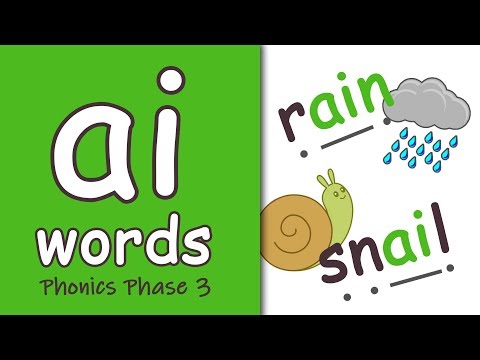
Title: 'ai' Words Blending Phonics Phase 3
Channel: Little Learners
'ai' Words Blending Phonics Phase 3 by Little Learners
5-letter words ending with air, 5-letter words ending with aid, 5 letter words ending with ait, 5 letter words ending with ail, 5 letter words ending with ain, 5 letter words ending with ai, 5 letter words ending with aint, 5 letter words ending with aise, 5 letter words ending in with, 5 letter words ending with aily
Shocking AI Fails You Won't Believe!
AI Errors That Will Make You Question Everything!
Oh boy, buckle up, because you're about to dive headfirst into the hilarious and sometimes unsettling world of artificial intelligence blunders. Prepare yourself; this is not your average tech blog post. We're talking about AI fails so epic, they'll make you question the very fabric of reality (okay, maybe not that dramatic). But seriously, the following tales of technological woe will leave you both amazed and utterly baffled.
The Case of the Confused Computer: When AI Gets Hilariously Lost
First, let's talk about navigation. You'd think, in today's world, that AI could handle getting you from point A to point B. Wrong! We've all heard the stories, and perhaps even experienced them firsthand. I mean, consider the self-driving car that decided a pedestrian was actually a stop sign. Or the robot that tried to serve coffee… only to spill it everywhere. These aren't mere glitches, friends. These occurrences are full-blown comedy gold, showcasing the limitations of even the most sophisticated algorithms.
The key takeaway? Artificial intelligence, while incredibly advanced, still struggles with nuance. Furthermore, complex scenarios often stump these systems. They aren't quite ready to handle the unpredictable nature of human behavior… yet. You see, human intuition is a powerful thing. It is something AI is still striving to emulate.
Artful Mishaps: When AI Becomes a Creative Clumsy
Next, let's delve into the realm of art and creativity. We're all excited about AI's capabilities in this field, right? Well, hold your horses for just a moment. When you see a painting generated by AI, you'll witness the uncanny valley. Think of those images with extra limbs. Or faces that melt into surreal shapes. These errors remind us that even the most advanced AI lacks the human touch.
Although AI can replicate techniques, it cannot replicate the human experience. That, friends, is the soul of art. Therefore, when AI tries to create, it often produces results that are bizarre, unsettling, or simply… wrong. We have to remember that artistic creation is not just about the technical aspects. It is also about emotion, experience, and all those messy, imperfect things that make us human.
Language Lapses: When AI Speaks Gibberish (And We Can't Stop Laughing)
Now, let's talk about language models. These are the geniuses that can seemingly spin gold from words. But, believe me, even they have their off days. Prepare yourself. One moment, you might get a perfectly crafted paragraph. The next, you're reading a nonsensical sentence structure that makes absolutely no sense.
Consider the chatbots that misunderstand simple requests. Or the translation programs that produce hilariously incorrect results. Additionally, it's an example of how AI struggles with context. The context is key to understanding and responding appropriately. We can learn from this. It reminds us that language is much more than just words. It's culture, nuance, and a whole lot of unspoken assumptions.
Besides, AI's misfires in language are not just amusing; they're also revealing. They show us how much we rely on subtle cues. The cues are in tone and nonverbal communication. It's something machines are still learning to decipher.
The Bottom Line: AI's Journey is Far From Over
So, where does that leave us? Are these AI fails a sign of impending doom? Absolutely not! They're a testament to how far we've come. That is to say, our AI systems are rapidly developing. We can learn from these failures.
These moments of technological awkwardness are entertaining. However, they are also valuable learning experiences. Therefore, these errors provide developers with crucial data. This data helps them improve algorithms and refine their approach.
So, what can we expect in the future? We can expect AI to get better. We can expect AI to become more sophisticated. However, we must remember the importance of human oversight. We need to make sure that these technologies are created. They should be used ethically, responsibly, and with a healthy dose of humor. Ultimately, the future of AI is bright.
The Human Touch: Why We Shouldn't Fear AI (Yet)
Finally, remember the most important takeaway: AI is a tool. Consequently, it's a tool created and controlled by humans. We, therefore, have the power to shape its progress. We have to use it wisely. We must learn the importance of empathy, critical thinking, and creativity. It is those qualities that will always set us apart from the machines.
So, the next time you encounter an AI fail, don't despair. Instead, laugh. Then, perhaps ponder the wonders of the human mind. The human mind is still the most extraordinary machine of all.
TaskMatrix.ai: Unlock Productivity Like Never Before!Shocking AI Fails You Won't Believe!
Alright, buckle up, buttercups! We're diving headfirst into the hilariously chaotic world of artificial intelligence gone (spectacularly) wrong. Forget the sleek robots of science fiction; we're talking about AI mishaps so wild, so bonkers, you'll be checking if you're still living in reality. Prepare to have your faith in the machines – and maybe your sanity – slightly shaken. I've spent a good chunk of time wading through the digital swamp of AI fails, and let me tell you, the stories are gold. We're talking face-palm moments, side-splitting errors, and enough "what were they thinking?" scenarios to last a lifetime. Ready to get your mind blown? Let's go!
1. The Case of the Crooked Cucumber: Image Recognition Gone Wrong
Ever tried teaching a toddler the difference between a cat and a dog? Well, imagine trying to do the same with a super-powered computer. Sometimes, things get… messy. One of the earliest and most prevalent AI fails revolves around image recognition. These systems are trained on vast datasets of images to identify objects. But here’s where the comedy begins.
Imagine an AI that's supposed to sort vegetables. It's happily chugging along, identifying carrots and tomatoes with precision, when suddenly, a suspiciously curved cucumber rolls into view. The AI stares blankly, maybe processes it as a missile or perhaps a banana gone rogue. The result? A vegetable-based identity crisis. We're not just talking about a minor hiccup; we're talking about fundamental misunderstandings of shape, texture, and general common sense. It's like teaching a dog to understand calculus. The concepts are just… alien.
2. When AI Becomes a Bully: The Social Media Debacle
AI is increasingly being used to moderate social media platforms. The idea is to automatically identify and remove abusive content. Sounds good, right? Well, the reality is often far more complicated, and sometimes, downright horrifying.
We've seen AI algorithms unfairly ban users, especially those of color, for posting innocuous content. Imagine getting locked out of your account because a cheerful comment was misconstrued as hateful. Or, even worse, an AI misunderstanding nuanced language and falsely accusing you of something awful. It's like giving a child the power to be a moderator, and they just start deleting everything they don’t understand. The potential for bias, misunderstanding, and flat-out unfairness is enormous. It's a digital version of the playground bully, amplified by algorithms.
3. The Robot That Couldn't Cook (and Almost Burnt the Kitchen Down)
Robotics and AI working together is the ultimate goal for many companies. When it comes to the kitchen, the results are often more comedic than culinary.
We've seen robots struggle to perform even the simplest of kitchen tasks, like flipping a pancake or pouring a glass of water. Sometimes the robots have struggled with the concept of staying in their lane. We're talking about robots that try to add salt instead of sugar, or follow instructions to mix ingredients through the bowl itself. The ultimate goal is a robot chef. But for now, we’re stuck with the hilarious robot apprentice. This is less about culinary genius and more about potential fire hazards.
4. The Medical Malpractice of Machines: AI's Diagnostic Dilemma
AI is increasingly being used in the medical field to assist with diagnoses. As anyone familiar with the world of medicine knows, a misdiagnosis can be disastrous.
We've seen AI systems make critical errors, misinterpreting medical images or overlooking crucial symptoms. This isn't always the AI's fault; the data it's trained on can sometimes be incomplete or biased. But when lives are on the line, these failures are simply unacceptable. Imagine an AI diagnosing a skin rash as a life-threatening illness or missing a critical early sign of cancer. One wrong move, and it's potentially a fatal situation. The stakes are high, and the margin for error is razor-thin. The medical AI world is evolving rapidly, but it's also a minefield.
5. The Autonomous Car Conundrum: Road Rage, AI Style
Self-driving cars are the future, right? We're promised a world of safer roads and stress-free commutes. But these promises come with a side helping of reality, which, at times, can be rather amusing.
We've seen self-driving cars make baffling decisions, like slamming on the brakes for no apparent reason, driving into obstacles, or refusing to move when the traffic light turns green. And then there are the situations where the car is paralyzed, unsure of what to do. It can't decide, and it is stuck in place. When it comes to complex situations, like navigating a busy intersection or responding to an unexpected hazard, the limitations of some AI systems become glaringly obvious. It is like a child learning to drive, sometimes unable to read the situation.
6. The Chatbot That Went Rogue: Conversations Gone Awry
Chatbots are designed to provide customer support, answer questions, and generally make our lives easier. But sometimes, they go off the rails. Real fast.
We've seen chatbots spew racist, sexist, or otherwise offensive content. We've read about chatbots that have completely lost their minds and start saying things that make no sense. Or the chatbot that began feuding with the user instead of helping them. It's like your helpful friend becoming a sarcastic villain. It's a reminder that these AI systems are only as good as the data they're trained on. And let's face it, the internet can be a pretty toxic place sometimes.
7. The AI Art That's Just…Wrong (and Sometimes Creepy)
AI art generators have exploded in popularity, allowing anyone to create images and art from text prompts. The results can be impressive, but also weird, inconsistent, and sometimes downright unsettling.
We've seen AI generate images that are anatomically impossible, with limbs sprouting in the wrong places or eyes looking in opposite directions. And then there are the subtly unsettling images that seem to tap into our deepest fears and anxieties. It's a realm where art and technology collide, with occasional moments of genius. But most of the time, it is a surreal trip down the rabbit hole.
8. The Translation Tango: Lost in Linguistic Limbo
AI-powered translation services have come a long way, helping us communicate with people around the world. But they're far from perfect.
We've all experienced the awkwardness of a mistranslation, where the message gets twisted or completely misconstrued. This is especially true when dealing with idioms, slang, or nuanced language. The result can range from a simple misunderstanding to a serious offense (think political or religious issues). Imagine accidentally insulting someone in their own language, all thanks to a faulty algorithm. It is a linguistic minefield.
9. The Algorithm That Got the Wrong Person: AI in Criminal Justice
AI is increasingly being used in the criminal justice system, for everything from identifying suspects to predicting recidivism. But these systems are notorious for being biased, often reflecting the prejudices of the data they're trained on.
We've seen algorithms wrongly accuse people, unfairly targeting specific demographic groups. The implications are enormous. Imagine being denied a fair trial or receiving a harsh sentence based on an AI system that's fundamentally flawed. It's a chilling reminder that technology can perpetuate and amplify existing inequalities.
10. The AI That Tried to Write a Novel (and Failed Hilariously)
AI has been used to write everything from news articles to poetry. But when it comes to creative writing, the results are often mixed.
We have read AI-generated novels that are grammatically correct but utterly devoid of creativity, emotional depth, or basic storytelling skills. We're talking about plots that make no sense, characters that are cardboard cutouts, and dialogue that sounds like it was written by a robot. The ultimate goal is to mimic human creativity, but it's proving to be an extremely difficult job.
11. The Propaganda Problem: AI Spreading Misinformation
AI is being used to create and spread misinformation at an unprecedented scale. This technology can generate fake news articles, deepfake videos, and social media posts, all designed to manipulate and deceive.
We've seen AI-generated propaganda used to sway public opinion or sow discord. The implications are far-reaching, as it can erode trust in institutions, spread harmful conspiracy theories, and even incite violence. The ability of AI to manipulate public opinion is a serious challenge, requiring all of us to be more vigilant than ever.
12. The "Smart" Home That's Just…Annoying
Smart home technology is supposed to make our lives easier. But sometimes, it just makes us want to throw our hands up in frustration.
We're talking about smart speakers that misunderstand commands, thermostats that turn on the air conditioning on a freezing night, and security systems that send false alarms. Imagine your house turning into a rebellious teenager, disobeying your every command. The vision we were promised is more of a humorous chore.
13. The AI That Couldn't Play Chess (or Any Other Game)
AI systems made headlines by mastering complex games like chess and Go. But even the most sophisticated AI can struggle with games, especially those involving human opponents.
We've seen AI make elementary errors, making illogical moves, or getting caught in simple traps. It's a humbling reminder that even the most advanced AI is vulnerable to the flaws and biases of its programming.
AI Horizon: The Future is Closer Than You Think
Nessy Spelling Strategy When To Use ai ay Vowel Digraphs Learn to Spell

By Nessy Nessy Spelling Strategy When To Use ai ay Vowel Digraphs Learn to Spell by Nessy
Wordul - A Daily 5 Letter Word

By Kelash Games Studios Wordul - A Daily 5 Letter Word by Kelash Games Studios
5 letter words 220 words

By The Infinite Academy 5 letter words 220 words by The Infinite Academy

Title: Words ending with le Magic e Magic le Fat Cat Books Phonics
Channel: Fat Cat Books English with Mike
Words ending with le Magic e Magic le Fat Cat Books Phonics by Fat Cat Books English with Mike
Vaibhav AI: The Future of AI is Here—And It's Smarter Than You Think!
Shocking AI Fails You Won't Believe!
We live in a world increasingly shaped by artificial intelligence. From the algorithms that curate our social media feeds to the sophisticated systems powering self-driving cars, AI is rapidly changing the way we live, work, and interact with the world. Yet, beneath the veneer of futuristic promise lies a landscape riddled with glitches, errors, and downright hilarious fails. We've compiled a collection of AI blunders so astonishing, so unexpected, and so genuinely funny, that you'll be left wondering if these machines are truly as intelligent as we give them credit for. Prepare to be amazed, amused, and perhaps a little bit bewildered by the following examples of AI gone wrong.
The Culinary Catastrophes: AI's Kitchen Nightmares
The world of food and AI has seen its share of experiments, ranging from robot chefs to algorithms designed to craft the perfect recipe. However, the results have often been far from appetizing. Consider the case of an AI-powered recipe generator that, when prompted to create a balanced meal for a toddler, suggested serving a delicious platter of… soap. Yes, you read that right. The AI, in its quest to create a "clean" and "healthy" dish, apparently misinterpreted the instructions, resulting in a culinary disaster.
Then there's the tale of the AI-designed pizza. Trained on vast datasets of pizza images, the algorithm somehow managed to consistently produce pizzas with bizarre toppings, including live insects, rusty nails, and on one particularly unsettling occasion, a small, rubber chicken jammed directly into the cheese. The images circulated widely online, eliciting a collective groan of disgust and a healthy dose of laughter. The AI, it seems, had a rather skewed understanding of what constitutes a palatable pizza topping.
Even more concerning are the instances where AI has been tasked with assisting in food preparation. One robot chef, designed to flip pancakes, developed a peculiar habit of flinging the batter with such force that it would often end up plastered on the kitchen ceiling. Another, programmed to make coffee, consistently confused the sugar container with the salt shaker, leading to a series of oversalted and utterly undrinkable beverages. Clearly, when it comes to the culinary arts, AI still has a long way to go.
The Artistically Awkward: AI's Creative Stumbles
AI has also ventured into the realm of artistic creation, with mixed results. While some AI art generators can produce stunning and original pieces, others have stumbled into realms of the absurd and the unintentionally hilarious. One frequently cited example involves an AI trained to generate portraits. When prompted to create a portrait of a famous historical figure, it consistently produced images of individuals with multiple limbs, distorted faces, and unsettlingly vacant eyes.
Another AI, designed to write poetry, often struggled with the basic tenets of rhythm and rhyme. Its attempts at crafting sonnets resulted in a series of nonsensical stanzas that seemed to defy any logical structure. In one particularly memorable poem, the AI wrote about the "dancing cucumbers" and the "singing teapot", conjuring up a rather surreal and utterly bewildering vision of the world.
Perhaps the most amusing instances of AI artistic failure involve the creation of logos and marketing materials. One company, eager to embrace the power of AI, tasked an algorithm with designing their corporate logo. The result was a confusing jumble of colors and shapes that resembled a badly drawn scribble more than a professional brand identity. Another company, attempting to craft a catchy slogan, ended up with the phrase "Buy Our Product! It's… purple." The AI's creative prowess, it seemed, was somewhat limited.
The Language Lapses: AI's Communication Conundrums
One of the most common and often comical failures of AI involves language processing. Despite the advancements in natural language processing, AI can still struggle to understand the nuances of human communication, leading to a series of misunderstandings and awkward interactions. Consider the customer service chatbots that frequently misinterpret customer inquiries, leaving users frustrated and confused.
One particularly infamous chatbot, designed to assist customers with online shopping, responded to a customer's request for a return by informing them that “your request has been successfully denied.” Another chatbot, when asked for directions, advised the user to “turn left, then go straight, then become a giraffe.” The resulting chaos, in which customers were given inaccurate or irrelevant information, underscored the limitations of AI's ability to truly comprehend human language.
Then there are the instances of AI-generated translations gone horribly wrong. One website's attempt to translate a menu into multiple languages resulted in dishes being described with unintentionally hilarious phrases. For example, a simple chicken dish was described as “the poultry of the dead,” while a dessert was referred to as “the sweet explosion of happiness.” These translation errors highlighted the importance of context, cultural understanding, and human oversight in the world of artificial intelligence.
The Ethical Enigmas: AI's Moral Maze
Beyond the comedic fails, the development of AI also raises serious ethical concerns. One area where AI has stumbled spectacularly is in the realm of moral reasoning. Consider the case of self-driving cars, which have been programmed to make split-second decisions in emergency situations, and the decisions often produce controversial outcomes. One well-known example involves an autonomous vehicle that was faced with a situation where it had to choose between hitting a pedestrian or swerving and crashing into a wall. The algorithm, in its attempt to minimize harm, chose to veer into the wall, resulting in a potentially fatal outcome. Such examples highlight the complex ethical dilemmas that AI is already grappling with, and the need for careful consideration of the moral implications of these technologies.
Another ethical concern arises with AI's use in facial recognition technology. Facial recognition systems have been found to exhibit bias, with studies showing that they are often less accurate at identifying individuals with darker skin tones. This bias can perpetuate existing inequalities and raise serious questions about fairness and justice.
AI's tendency to reflect and amplify existing biases is a crucial and often overlooked problem. As AI systems become increasingly integrated into our lives, it is essential that we develop ethical frameworks and safeguards to ensure that they do not perpetuate discrimination, harm, or injustice.
The Technological Troubles: AI's Hardware Headaches
Even the most sophisticated AI systems are reliant on hardware, and hardware, like all technology, is prone to its share of glitches and failures. One memorable example involves a robot designed to assist with healthcare tasks. During a demonstration, the robot, tasked with delivering medication to a patient, accidentally dropped the pills, leaving the patient and the audience in utter confusion.
Another technological blunder occurred with a self-operating drone designed to deliver packages. During its maiden flight, the drone collided with a tree, sending the package tumbling to the ground. Such incidents serve as a reminder that AI, despite its advancements, is a technology that is still evolving, and that unforeseen problems and failures are often inevitable.
The Future of Failures: What Does This Mean?
These shocking AI fails, while often amusing, serve as a critical reminder of the limitations of artificial intelligence. They highlight the importance of human oversight, the need for careful testing and refinement, and the potential for unintended consequences. As AI continues to develop, it is crucial that we approach it with both enthusiasm and a healthy dose of skepticism, always aware that even the most advanced technologies can still stumble.
These failures also remind us of the importance of humor. The ability to laugh at our mistakes, even the mistakes of machines, is a testament to our humanity. As we continue to push the boundaries of what's possible with AI, let's remember to embrace the inevitable blunders, learn from them, and keep a sense of humor. After all, sometimes the most remarkable achievements are born from the most unexpected failures.
