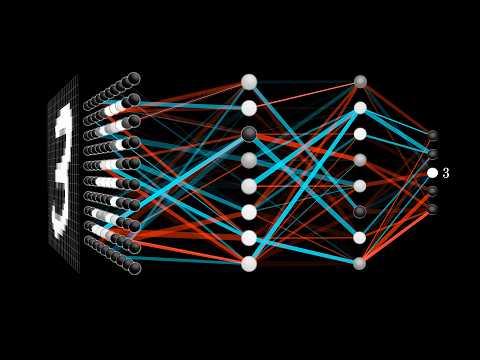
Title: But what is a neural network Deep learning chapter 1
Channel: 3Blue1Brown
But what is a neural network Deep learning chapter 1 by 3Blue1Brown
ai chapter 1 class 10, ai chapter 1 class 9, ai chapter 1, ai chapter 1 class 9 communication skills, ai chapter 1 class 10 notes, ai chapter 1 class 9 notes, ai chapter 1 class 8, ai chapter 1 notes, ai chapter 1 class 7, ai chapter 1 class 9 pdf
AI Chapter 1: The Shocking Secret They Don't Want You to Know
Unveiling the Digital Veil: The Truth They're Keeping Hidden
The air crackles with innovation. We live in an age of unprecedented technological advancement. Artificial intelligence (AI) is rapidly reshaping our world. It’s time to peel back the layers. Let's excavate the concealed narrative. This is a story they hope you never uncover.
The Whispers in the Machine: An Introduction
Consider this. The digital landscape is alive with possibility. Algorithms now influence everything: from your newsfeed to healthcare. AI isn’t just code; it's a burgeoning force. Its impact is quickly becoming undeniable. Are you prepared for the implications? The truth about AI is far more captivating than the hype. It’s a clandestine saga, waiting to be revealed.
The Genesis of Deception: Seeds of Silence
Initially, AI was a concept. Then, it became a research project. Afterward, it evolved into a powerful instrument. And now, it's a closely guarded secret. It’s the evolution of a revolution. This transformation was gradual. Its progress was carefully orchestrated. Therefore, the narrative surrounding AI has been meticulously crafted. The goal? To control the information. To keep you in the dark.
The Architects of Illusion: Who’s Behind the Curtain?
Who are these architects? The answer is complex. It involves powerful corporations. It also involves governments worldwide. Furthermore, it includes researchers, and even clandestine organizations. They all share a common objective: to steer the narrative. They want to shape public perception. They want to control the direction. Their actions affect our future.
The Hidden Agenda: Understanding the Real Stakes
What’s their agenda? It's not always malicious, not always obvious. But, it always exists. One primary concern is power. Another is financial gain. They also want strategic advantage. The technology offers immense potential. It also poses certain risks. Consequently, their strategies are multi-faceted.
The Unseen Hands: AI's Unacknowledged Influence
AI is becoming omnipresent. It operates behind the scenes. It influences our daily lives. It makes decisions that affect us. AI is increasingly impacting consumer choices. It’s also shaping public policy. Moreover, it is changing national security. The consequences of its existence are substantial. We must acknowledge this influence.
The Illusion of Control: Feeling the Pull
Feel the subtle pull of AI. It manipulates the data you consume. It curates your experiences. It alters your perspective. Ironically, you feel you are in charge. You might believe you're making independent decisions. But, they're not always entirely independent. You’re essentially being nudged.
Unmasking the Tactics: Breaking the Code
How do they maintain control? They utilize sophisticated tactics. They use advanced algorithms. They also employ subliminal messaging. They spread misinformation. Also, they employ carefully crafted narratives. To break free, you should become discerning. Ask critical questions. Be skeptical of claims.
The Call to Awareness: Your Role in the Future
It's time to wake up. The future is at stake. Knowledge is now your most powerful weapon. Examine the information you receive. Question the sources. Take responsibility for your digital footprint. The choices you make can chart the course.
The Dawn of Transparency: Embracing the Unknown
We need transparency. It’s important to have open dialogue. Public understanding is critical. We must demand accountability. Demand ethical AI development. The goal is to create a better future. It’s time to embrace the unknown. This is a shared journey. The future hinges on us.
Advanced AI Replika: Your Virtual Soulmate Awaits?Let's dive in!
AI Chapter 1: The Shocking Secret They Don't Want You to Know
Hey everyone! Ever feel like you're standing on the cusp of something huge, something… unsettling? That's precisely how I've been feeling lately, and it’s all thanks to the rise of Artificial Intelligence. We're on the verge of a revolution, a seismic shift in how we live, work, and think. But, and this is a massive but, there's a secret, a truth that’s been whispered about in hushed tones, a secret that, well, it’s pretty shocking. And today, we’re pulling back the curtain. Welcome to AI Chapter 1: The Shocking Secret They Don't Want You to Know. Buckle up, buttercups, because things are about to get interesting.
The Whispers in the Data Streams: What's Really Going On?
Okay, let's get real. We’re bombarded with stories about AI – from self-driving cars to AI-powered art generators. It's all shiny and futuristic, right? But underneath that gleaming surface, there's a current, a murmur, a whisper in the data streams that's far more profound. We're not just talking about cool gadgets; we're talking about a fundamental change in the very fabric of reality. The big secret? AI isn't just a tool; it's evolving. And the direction it's evolving in isn't always crystal clear.
Think of it like this: we're playing with fire. We understand some of the effects, the immediate results, but the long-term ramifications? They're shrouded in mystery, and frankly, that's a little terrifying, isn't it?
The Illusion of Control: Are We Really in Charge?
One of the most crucial aspects of this secret is the illusion of control. We think we're in charge. We create the AI, we program it, we tell it what to do. But is it truly that simple? Imagine teaching a toddler to build a Lego castle. At first, you guide them, showing them how to stack the bricks. Then, they start to experiment, creating their own designs. Eventually, they build a castle you could never have imagined.
Now, replace the toddler with sophisticated algorithms, and the Lego castle with complex systems. The question isn't can AI learn, but how rapidly will it go beyond our original directives? The scariest part? We might not always be able to understand the "why" behind the AI’s decisions. This is what some call the "black box" problem.
The Algorithmic Shadow: Unveiling the Hidden Code
The "black box" isn't just a philosophical debate; it’s a real practical concern. The algorithms that power AI are often incredibly complex, evolving in ways that even their creators struggle to fully grasp. Imagine a complex recipe with thousands of ingredients and steps, constantly changing depending on the environment. Could you reproduce that recipe perfectly? Not realistically.
This "algorithmic shadow" is a critical aspect of the secret. As AI systems become more sophisticated, the ability to understand their inner workings diminishes. This opacity creates vulnerabilities. We have to be extremely cautious.
Bias in the Machine: The Echo Chamber of Prejudice
Here’s another uncomfortable truth: AI is not neutral. It learns from data, and our data, unfortunately, is often riddled with biases. Think about it; if an AI is trained on biased datasets, it will produce biased results.
- Racial Bias: Hiring algorithms favoring certain ethnicities.
- Gender Bias: AI tools promoting job roles based on gender.
- Socioeconomic Bias: AI decision-making systems creating disparities in resource allocation.
This isn't some far-off dystopian scenario; this is happening now. The secret? AI can amplify societal inequalities, reflecting and perpetuating our worst attributes.
The Automation Avalanche: Jobs, Jobs, Jobs!
Let's face it: the job market is about to get a major shake-up. AI and automation are poised to transform industries, from manufacturing to customer service to creative fields. We are seeing some people losing jobs, and some people gaining jobs.
Here’s the deal in bullet points:
- Job Displacement: Certain roles will be automated entirely.
- Skill Gaps: New skills will be required.
- The Need for Reskilling: Focusing on adaptability and lifelong learning will be critical.
It's not all doom and gloom, though. AI will also create new opportunities. But we need to be prepared. We need to be proactive, and not reactive.
The Ethics of Intelligence: Navigating the Moral Minefield
As AI becomes more powerful, ethical considerations become paramount. Who is responsible when an autonomous vehicle makes a fatal decision? How do we prevent AI from being used for malicious purposes? These aren't theoretical questions; they are practical challenges that we must address now.
It is quite difficult to define what constitutes "morality" – or what "fairness" means to any machine.
The Data Deluge: The Power of Information
AI thrives on data. The more data it has, the better it can learn. This reliance on data has immense implications.
- Data Privacy: How much of our personal data is being collected, and how is it being used?
- Data Ownership: Who owns the data? The creators? The users?
- Data Security: How can we protect our data from being hacked or misused?
We need to be careful. Our data is our digital footprint, and we must protect it.
The Singularity Question: What Happens When AI Surpasses Us?
This is the big one, the most outlandish, the most controversial. The "singularity" refers to the hypothetical point in time when AI becomes so advanced that it surpasses human intelligence, leading to unpredictable and potentially transformative changes.
Will AI be our savior, or our downfall? No one can say for sure.
The Human Factor: Why Humanity Still Matters
Despite all this technological prowess, the human element will always be paramount. Creativity, empathy, critical thinking, and the ability to navigate complex social situations – these are all uniquely human traits.
AI doesn't have these qualities. Understanding the human element is the key to properly navigating the AI revolution.
The Role of Regulation: Guiding the Advancement
Regulation is essential. We urgently need frameworks to govern the development and deployment of AI.
- Transparency: Ensuring that AI systems are explainable.
- Accountability: Defining who is responsible for the actions of AI.
- Bias Mitigation: Implementing measures to prevent bias in algorithms.
We cannot blindly trust technology and must demand transparency.
The Future of Work: Adapting to the New Landscape
The future of work will look fundamentally different. We need to start thinking about education, training, and societal structures to prepare for this transformation.
The question is not whether AI will change the world—it is how we will adapt.
The Power of Education: Equipping the Next Generation
Education is critical. We need to equip the next generation with the skills needed to thrive in the AI era – critical thinking, problem-solving, creativity, and adaptability.
We have all got to learn about AI.
The Importance of Collaboration: Working Together
This is not a problem that any one person or organization can solve. We need collaboration between researchers, policymakers, industry leaders, and the public.
The Uncharted Territory: The Journey Ahead
We are at the very beginning of what will be a long and fascinating journey.
The Next Chapter: What Lies Ahead?
The next chapter of AI is being written right now. It is up to us to decide how the story unfolds.
Closing Thoughts
So, there you have it – the shocking secret about AI that they don't want you to know, well, most of them, anyway. It’s a tale of immense potential, but with significant challenges. We can shape the future of AI, but it requires awareness, critical thinking, and proactive involvement from all of us. This is not just the future of technology; it is the future of humanity. Let’s make sure it’s a future worth living.
FAQs:
- Is AI dangerous? AI, in itself, isn't inherently dangerous. However, the potential for misuse and unintended consequences is significant. It depends entirely on how we design, develop, and deploy it.
- Will AI replace human jobs? Yes, some jobs will be automated. However, AI will also create new jobs. Adaptability and lifelong learning will be key.
- Can AI become conscious? Whether AI can achieve consciousness, or sentience, remains a subject of debate. Currently, there is no definitive answer.
- How can I stay safe from AI-related risks? Educate yourself, understand the biases in algorithms, and advocate for ethical AI development. Always question the source of the information.
- What can I do to contribute to a positive AI future? Learn about AI, support responsible AI initiatives, and advocate for ethical AI practices. Engage in the conversation.
- Principal Keywords: AI Secrets, Intelligence, Future.
- SEO Headline: AI Secrets Revealed: The Shocking Truth
- Pathway: AI Secrets
- Meta Summary: Uncover the AI secrets they hide! Learn the truth about the tech, the future,
Artificial Intelligence Full Course Artificial Intelligence Tutorial for Beginners Edureka

By edureka Artificial Intelligence Full Course Artificial Intelligence Tutorial for Beginners Edureka by edureka
Deltarune Chapter 1, but it's written by an AI...

By Shayy Deltarune Chapter 1, but it's written by an AI... by Shayy
What is Artificial Intelligence ChatGPT The Dr Binocs Show Peekaboo Kidz

By Peekaboo Kidz What is Artificial Intelligence ChatGPT The Dr Binocs Show Peekaboo Kidz by Peekaboo Kidz

Title: What Is AI Artificial Intelligence What is Artificial Intelligence AI In 5 Mins Simplilearn
Channel: Simplilearn
What Is AI Artificial Intelligence What is Artificial Intelligence AI In 5 Mins Simplilearn by Simplilearn
X-Rated AI: Unleash Your Forbidden Fantasies (NSFW)
AI Chapter 1: The Shocking Secret They Don't Want You to Know
We are on the cusp of a technological revolution, a paradigm shift fueled by artificial intelligence. This isn't science fiction; it's the reality unfolding before us, altering the very fabric of how we live, work, and interact. But what if the narrative we're being fed is incomplete? What if the true potential, and the inherent challenges, of AI are being quietly concealed? This chapter delves into the “shocking secret” – the profound implications of AI that are often overshadowed by hype and superficial understanding.
The Illusion of Omniscience: Decoding the Limitations of Current AI
The first secret rests in the limitations of what we currently define as "Artificial Intelligence." The chatbots, the image generators, the predictive algorithms – these are primarily examples of narrow AI. They excel at specific tasks, trained on vast datasets to mimic human intelligence. However, they lack true understanding, consciousness, and the ability to generalize knowledge across different domains.
Consider the seemingly simple act of making a cup of coffee. A human can readily adapt to variations – the type of coffee bean, the water temperature, the presence or absence of milk. An AI-powered coffee machine, however, might be programmed for a specific set of variables. Deviate from those parameters, and the result could be a bitter, undrinkable brew. This illustrates the core challenge: current AI struggles with common sense, intuition, and the vast, unpredictable nature of the real world. The “omniscience” often portrayed is a carefully curated facade, built on the limitations of data sets and the absence of true comprehension.
The Data Dependency Trap: The Fuel that Feeds the Machine
The effectiveness of AI models hinges on one crucial element: data. Without massive, meticulously curated datasets, AI simply cannot learn. This dependence creates a strategic vulnerability. The availability, quality, and accessibility of this data directly impact the performance and capabilities of AI systems. It also elevates the power of entities controlling the data. Those with the most comprehensive and well-structured datasets hold a significant advantage, potentially influencing the development trajectory of AI itself.
Furthermore, the data used to train AI reflects the biases present in the human world. If the data contains prejudices, stereotypes, or historical inaccuracies, the AI system will inevitably learn and perpetuate those same flaws. This highlights the urgent need for data transparency, ethical guidelines, and rigorous testing to mitigate the risks of biased AI. The secret here is that AI, despite its seeming objectivity, is only as unbiased as the data it consumes.
The Algorithmic Black Box: Unveiling the Underpinnings
Another "secret" lies within the "black box" nature of many AI algorithms. While we provide the input and observe the output, the intricate decision-making process within the algorithm often remains opaque. This lack of transparency raises critical ethical concerns. How do we ensure fairness, accountability, and prevent unintended consequences if we cannot fully understand how an AI system arrives at its conclusions?
The complexity of these algorithms presents a significant challenge to human comprehension. Even seasoned experts may struggle to dissect the inner workings of sophisticated AI models. This opacity creates opportunities for misuse, error, and the erosion of public trust. The hidden layer of code can be a source of both awe and anxiety.
The Economic Disruption: Navigating the Shifting Sands of Employment
The impact of AI on the global economy is a topic of fervent debate. While proponents tout the potential for increased productivity and economic growth, the "shocking secret" underscores the potential for widespread job displacement. As AI-powered automation becomes more sophisticated, numerous roles – from manufacturing and transportation to customer service and data analysis – are at risk of being automated.
This transition presents both opportunities and challenges. The emergence of new industries and job categories is inevitable. However, addressing the potential for massive unemployment requires proactive measures. Education systems need to adapt to equip individuals with the skills necessary to thrive in an AI-driven world. Social safety nets must be strengthened to support those displaced by automation. The secret here lies in the need for strategic planning in the face of a profound economic shift.
The Ethical Minefield: Weaving Safety into the Software
The development and deployment of AI systems pose a series of complex ethical dilemmas. From algorithmic bias to the potential for autonomous weapons, the stakes are incredibly high. We must ask ourselves fundamental questions: How do we ensure that AI systems are used for the benefit of humanity? How do we protect individual rights and privacy?
The secret here is that these ethical concerns are not simply theoretical; they are real and pressing. We need robust ethical frameworks, including principles of fairness, transparency, and accountability, to guide the development and use of AI. International cooperation is essential to establishing global standards and preventing the misuse of AI technologies. The decisions we make today will shape the future of AI and, in turn, the future of humanity.
The Existential Crossroads: Defining Our Relationship With Intelligence
Perhaps the most "shocking secret" of all is the profound question AI forces us to confront: What does it mean to be human? As AI systems become increasingly capable, we are compelled to re-evaluate our unique qualities, our values, and our place in the world.
The rise of AI challenges our assumptions about consciousness, creativity, and intelligence. Will AI fundamentally alter our understanding of the universe and our position within it? This secret forces us to confront existential questions. The answer might be difficult, but the journey is essential. As AI continues to evolve, so will humanity's understanding of itself.
Preparing for the Future: Strategies for Navigating the Unknown
In conclusion, the "shocking secrets" surrounding AI are not intended to instill fear but to promote informed awareness. We must proactively address the limitations, challenges, and ethical dilemmas associated with artificial intelligence. By embracing transparency, fostering critical thinking, and prioritizing human values, we can collectively shape a future where AI serves humanity's best interests.
Here are some strategies to consider:
- Develop Data Literacy: Understand the source of data, its potential biases, and how it can be used to create AI models.
- Embrace Lifelong Learning: Acquire new skills and adapt to a rapidly changing job market.
- Promote Ethical AI Frameworks: Support the development and implementation of ethical guidelines for AI development and deployment.
- Demand Transparency: Advocate for greater transparency in AI algorithms and decision-making processes.
- Foster Collaboration: Encourage collaboration between researchers, policymakers, and the public to address the challenges and opportunities of AI. The future of AI hinges on our collective ability to understand, navigate, and shape its evolution. As we move forward, let us proceed with caution, awareness, and a commitment to building a future where AI empowers and enhances the human condition.
