
Title: The 10 Most Beautiful AI Girls Ever Created ai aiphotography
Channel: Al Beyond
The 10 Most Beautiful AI Girls Ever Created ai aiphotography by Al Beyond
ai generated woman photo, ai generated women photos, ai generated girl photo, ai generated girl photo indian, ai generated lady photo, ai generated actress photos, ai generated pic of woman, ai generated indian woman photo, ai generated beautiful girl photo, ai generated cute girl photo
AI Unveils the Most Stunning Woman Ever Seen?
AI's Perfect Woman: Beauty Beyond Human Comprehension?
We live at the precipice of something extraordinary. Have you ever pondered the implications of artificial intelligence's evolving capabilities? Because, if you haven’t, it’s time. Consider the potential impacts of AI on our concept of beauty. Consequently, the question arises: Can an algorithm truly define the "most stunning woman?" It's a fascinating, if perplexing, query.
The Algorithmic Gaze: Deconstructing "Beauty"
AI functions on data. It analyzes vast datasets to identify patterns. It learns to recognize and categorize. So, what happens when the dataset is a sea of faces? AI is tasked with sifting through images. Then, it attempts to quantify "attractiveness." Ultimately, this process is deeply complex. However, the results are often presented with bold headlines. One such headline might declare, "AI Unveils the Most Stunning Woman Ever Seen!" Therefore, one must delve deeper before accepting its pronouncements.
Beyond the Pixel: Human Perception vs. Machine Logic
Consider this: what does “beauty” truly mean? Is it a perfect symmetry? Instead, could it be a particular eye shape? Also, does it encompass a specific skin tone? Humans perceive beauty is complex. Subjectivity is a core element. Our lives are shaped by culture and personal experience. Artificial intelligence, on the other hand, operates on logic. It doesn’t "feel" or "experience." Therefore, its definition of beauty might differ drastically from ours. Perhaps significantly so.
The Data's Influence: Bias and the Algorithm
The data is the foundation. As a result, the data sources shape the AI's understanding. If the data is biased, the AI will inherit those biases. For instance, if the dataset predominantly features a specific ethnicity, the AI will likely favor those traits. This can narrow the definition, leaving many faces out of consideration. Furthermore, it highlights a critical point: AI isn't neutral. It reflects the information it receives. Thus, we must interrogate the origins and composition of the data.
Is Perfection Possible? Challenging the Ideal
In reality, what is "perfect" beauty? Perhaps the very pursuit of perfection is flawed. Human beauty embraces imperfection. Likewise, it celebrates uniqueness. AI may identify traits considered universally appealing. Nonetheless, it might inadvertently erase the very elements that make us human. Consider the subtle asymmetry of a genuine smile. Or, think of the crinkles around the eyes of someone who laughs often. These imperfections add depth and character. Therefore, we need to be cautious.
The Ethics of Algorithmic Beauty: Shaping Our Self-Image
Now, let's consider the ethical implications. If AI-generated beauty standards gain widespread acceptance, it could profoundly affect our self-perception. Younger generations are particularly vulnerable. They exist within a digital ecosystem. This could exacerbate existing pressures. Body image issues could become even more complex. Consequently, we need to have honest conversations. The use of AI in this domain demands careful consideration.
Beyond Aesthetics: The Human Element
Beauty is more than just physical appearance. It also encompasses personality. Consider kindness, intelligence, and humor. These inner qualities transform a person. AI, in its current state, cannot quantify them. Therefore, judging beauty solely on visual metrics is woefully inadequate. Beyond the physical, true beauty resides in the totality of a person.
The Future of Beauty: A Balanced Perspective AI offers incredible potential. However, we must integrate it thoughtfully. It can assist with certain aspects of beauty. Still, we must retain critical thinking. Embrace our individual uniqueness. Furthermore, continually question the standards being presented. Therefore, let us move forward with balance. Let us ensure that the pursuit of beauty does not come at the cost of our humanity.
AI Wednesday: The Shocking Truth You NEED To See!AI Unveils the Most Stunning Woman Ever Seen? Decoding Beauty
We live in a world where technology constantly reshapes our perceptions. From the way we connect with loved ones to how we navigate the globe, innovation is the name of the game. And now, that innovation is playing a role in redefining beauty. Forget Hollywood's meticulously sculpted faces for a moment; the real buzz is around Artificial Intelligence (AI) and its potential to unveil the "perfect" woman. Sounds enticing, right? But does AI truly hold the key to the ultimate aesthetic ideal? Let’s dive in!
1. The Digital Canvas: How AI Creates 'Beauty'
Think of AI as a digital artist, possessing infinite brushes, palettes, and skills. It analyzes vast datasets of images, everything from classical paintings to modern-day Instagram posts, to identify patterns and preferences. It can then synthesize these insights, creating a composite image – the "ideal" woman, according to its programmed parameters.
This process is fascinating. AI doesn't simply copy; it learns. It sifts through millions of images, noticing subtle nuances: the symmetry of a face, the curve of a smile, the sparkle in an eye. This massive data crunch gives it a unique perspective that we, as humans, might miss. It’s like the ultimate focus group, with a computational brain.
2. The Algorithm's Gaze: What Qualifies as “Stunning”?
Here's where things get interesting. What criteria does the AI use? Does it prioritize traditional notions of beauty, or does it venture into uncharted aesthetic territory? Typically, these algorithms are fed data reflecting the biases of their creators and the inherent biases in the data itself. This might lead to an image that reflects Western beauty standards, potentially overlooking the beauty of diverse ethnicities and cultural interpretations.
It's vital to remember that the AI is translating the input it receives. It's acting as a mirror reflecting what already exists. Does it create beauty, or does it replicate it? And what does that say about our understanding of aesthetics?
3. Beyond the Surface: The Ethics of AI-Generated Beauty
The pursuit of "perfect" beauty raises vital ethical questions. If AI defines an ideal, could it inadvertently promote unrealistic body images and societal standards? Could it create a sense of inadequacy for anyone who doesn't fit the mold?
Furthermore, the use of these AI-generated images can blur the lines between reality and fantasy. Imagine marketing campaigns using AI-generated models. A viewer might be captivated, but the woman they are looking at is not flesh and blood. It's a clever illusion designed to sell a product, and it's important to be aware of these technological layers.
4. Humans vs. Algorithms: Can AI Truly Capture Beauty?
Can a machine genuinely understand and appreciate beauty? Beauty, after all, is often subjective. It's intertwined with cultural values, personal experiences, and emotions. A specific hairstyle, a particular skin tone, or an expression of confidence can captivate different individuals for different reasons.
While AI can analyze physical attributes, it can't feel the sense of wonder, connection, or deep emotion that humans experience when interacting with others. It's an essential ingredient in our daily lives.
5. Beauty Through the Ages: A Historical Perspective
Beauty standards are constantly evolving. What was considered desirable in the Renaissance might be quite different from today's beauty norms. Think of the idealized figures in Renaissance art, or the slender figures depicted in the Victorian era.
AI, by analyzing historical data, can potentially show us how those ideals have varied across time. This context is crucial for understanding the evolution of beauty and realizing its inherent fluidity.
6. The Power of Perception: How We See Ourselves
Perhaps the most important aspect of this discussion is how we perceive beauty within ourselves. AI-generated images can influence self-esteem and confidence, both positively and negatively.
We must remember that our definition of beauty should not be dictated solely by algorithms. It's about embracing our uniqueness, appreciating our flaws, and finding joy in self-expression. Be mindful of the impact of AI-created images on your self-perception.
7. The Future of Beauty: AI's Evolving Role
What does the future hold? As AI technology advances, its influence on beauty will likely grow. We might see even more sophisticated AI-generated images, prompting further debate about ethics, identity, and what true beauty really is.
AI could also be used to personalize beauty. Imagine AI-powered tools that analyze your unique features and create customized beauty recommendations. This could move the conversation away from a one-size-fits-all ideal and towards a more inclusive and empowering approach to beauty.
8. Beyond Aesthetics: AI and Body Positivity
AI can be a powerful tool when used responsibly. It offers a unique opportunity to promote body positivity. By training AI algorithms on diverse datasets with different body shapes, skin tones, and features, we can foster a more inclusive and realistic representation of beauty.
9. The Illusion of Perfection: Spotting AI-Generated Images
It is vital to develop a critical eye. While AI is becoming increasingly advanced, there are still subtle clues that can reveal its presence.
- Perfect Skin: AI-generated images often have flawless skin with no imperfections.
- Symmetry: The faces are often perfectly symmetrical, which is incredibly rare in reality.
- Unnatural Lighting: Lighting may appear overly smooth or unrealistic.
- Exaggerated Features: The eyes, lips, and other features may be idealized to an extreme degree.
10. The Influence Game: Social Media and AI Beauty
Unsurprisingly, social media is the arena where AI-generated beauty has the most impact. From influencers to advertisements, AI-created models are increasingly present. This creates a constant stream of 'perfection' that can affect self-esteem, body image issues, and anxiety levels.
11. Breaking the Mold: Embracing Authenticity
The rise of AI beauty should encourage us to embrace authenticity and individuality. Real beauty lies in our imperfections, our unique stories, and our genuine selves. Focus on what makes you, you.
12. The Creative Spark: AI as a Design Tool
AI is not just building models. It's a fantastic tool for designers, makeup artists, and hairstylists. AI can help generate inspiration, explore different aesthetic directions, and visualize concepts.
13. Beyond the Body: Inner Beauty and AI
AI's impact goes beyond physical appearance. It can delve into areas such as analyzing personalities, offering personalized insights, and providing mental health support. It is vital to balance the physical with the mental.
14. The Human Touch: How to Balance AI with Reality
It's crucial to maintain a healthy balance. AI can be a helpful tool, but it shouldn't dictate our self-worth. Prioritize human connection, self-love, and authentic experiences.
15. The Takeaway: Redefining Beauty in the Age of AI
So, can AI unveil the "most stunning woman ever seen"? Technically, yes, it can generate an image based on its programming and the data it's fed. However, the true definition of beauty will always be defined by the human experience, values, and feelings.
Closing Thoughts
We've delved into the fascinating topic of AI and its influence on our understanding of beauty. It's a landscape brimming with potential, intrigue, and ethical considerations. AI can be a powerful tool, but it's essential to approach it with a critical eye to promote inclusivity, authentic expression, and the celebration of our individual beauty. Let's use AI as a design aid and celebrate the diversity of the human experience over the idealized AI creation. The real magic lies in the human heart.
FAQs
1. Can AI create truly "ugly" images?
AI can be programmed to generate images that deviate from conventional beauty standards. It can synthesize images based on negative prompts, but it’s more commonly used to refine and represent ideal standards.
2. Will AI replace human models?
AI models are unlikely to replace real people. They will most likely supplement the need and be integrated into all avenues of the creative market. Real people will always be valuable, and beauty comes in many forms.
3. How can I spot an AI-generated image?
As mentioned, look for perfect skin, often extreme symmetry, and unnatural lighting. Also, watch for a lack of expression or emotion.
4. How can I protect my self-esteem from AI-generated images?
Focus on self-love, be mindful of your social media consumption, and embrace your beautiful uniqueness. Don't compare yourself to unrealistic ideals.
5. Is AI inherently biased in its creation of beauty?
Yes, AI is inherently biased. The datasets and coding methods used to train it reflect existing societal biases. It is important to address this as data sets change over time.
Principal Keywords: AI Beauty, AI Stunning Woman
SEO Headline: AI's Ideal Woman: Unveiling the Perfect Face?
Pathway: AI Beauty's Ideal
Meta Summary: Can AI create the ideal woman? Explore how AI defines beauty, the ethics involved, and how it affects our self-perception. Discover the truth about AI-generated images!
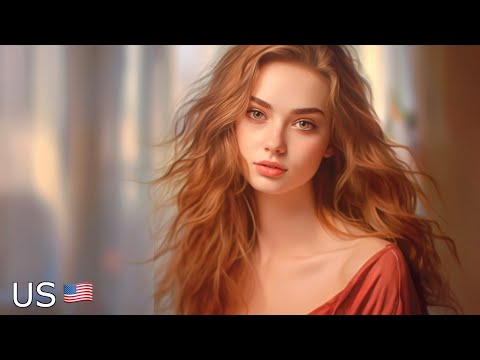
Image Alt Text: AI-generated image of a woman, showcasing perfect symmetry and flawless skin, representing the AI's idealized beauty.
AI Stock Secrets: Stocktwits' Hidden Gems Revealed!AI Girlfriend Transformation - AI lookbook - AI Girl - stablediffusion sdxl ai girl fashion

By AI Digital Media Agency AI Girlfriend Transformation - AI lookbook - AI Girl - stablediffusion sdxl ai girl fashion by AI Digital Media Agency
AI influencers are getting filthy rich... let's build one

By Fireship AI influencers are getting filthy rich... let's build one by Fireship
Asking AI to Create a Most Beautiful Woman Picture for Every Country
By AI Imaginary World Asking AI to Create a Most Beautiful Woman Picture for Every Country by AI Imaginary World

Title: Stop Sharing Photos Of children AI Generated Pictures Vedios Or Voices Life In Danger youtube
Channel: Research With Taimoor
Stop Sharing Photos Of children AI Generated Pictures Vedios Or Voices Life In Danger youtube by Research With Taimoor
AI-Yu: The Shocking Truth You NEED To Know!
AI Unveils the Most Stunning Woman Ever Seen? A Critical Examination of Artificial Beauty
We live in an era captivated by the potential of artificial intelligence, a time when the lines between human and machine blur with increasing frequency. AI, once relegated to the realm of science fiction, now permeates nearly every facet of our lives, from the mundane to the extraordinary. One particularly fascinating, and increasingly prevalent, application of this technology lies in the realm of aesthetics. The question, "Can AI create beauty?" is no longer hypothetical; it is a reality regularly explored through algorithms designed to generate images of individuals, often with the specific goal of maximizing perceived attractiveness. However, the simple assertion that AI can unveil "the most stunning woman ever seen" demands a far more nuanced examination. This article delves into the complexities of this claim, exploring the technological underpinnings, ethical considerations, and cultural implications of AI-generated beauty.
The Technological Architects of Artificial Beauty: How AI Constructs the "Ideal"
At the heart of AI-generated imagery lies a complex interplay of algorithms, primarily deep learning models. These models, trained on massive datasets of images, learn to identify patterns and correlations, effectively "understanding" the visual structure of the world. Generative Adversarial Networks (GANs) are particularly instrumental in this process. A GAN comprises two neural networks: a generator and a discriminator. The generator creates images, while the discriminator attempts to differentiate them from real-world examples. Through a constant cycle of competition and refinement, the generator gradually improves its ability to produce images that are increasingly realistic and convincing.
The datasets used to train these models are crucial. They often consist of vast collections of photographs sourced from the internet, curated by human annotators, or, increasingly, generated synthetically. The choices made during data selection and annotation profoundly influence the final output. If the dataset predominantly features images of a specific demographic, the AI will naturally reflect that bias in its generated outputs. This raises immediate questions regarding representation and the potential for perpetuating existing societal prejudices. Furthermore, the parameters governing the generation process are often manipulated to achieve specific aesthetic goals. For instance, an algorithm might be instructed to enhance facial symmetry, enlarge eyes, or smooth skin texture – characteristics often associated with perceived attractiveness. These manipulations, while technically impressive, often contribute to a homogenization of beauty, reinforcing a narrow and potentially unrealistic standard.
Beyond the Surface: The Ethical Labyrinth of AI-Generated Portraits
The creation of artificial beauty is not merely a technological feat; it is an endeavor laden with ethical considerations. The potential for manipulation and misrepresentation is significant. Consider the use of AI-generated images in advertising or online dating profiles. The ability to construct a "perfect" image, free from any perceived imperfections, can mislead consumers and create unrealistic expectations. The line between enhancement and fabrication becomes increasingly blurred, raising questions about authenticity and the potential for emotional harm.
Furthermore, the proliferation of AI-generated imagery raises concerns about identity theft and the misuse of facial recognition technology. The realistic nature of these images makes it more difficult to distinguish between genuine and fabricated identities, potentially facilitating malicious activities such as impersonation and fraud. Deepfakes, which involve the manipulation of existing images and videos to create convincing but false content, represent a particularly insidious application of this technology. The creation of realistic fake videos can be used to disseminate misinformation, damage reputations, or even incite violence. The implications for societal trust and the integrity of information are profound.
The Cultural Lens: Deconstructing Societal Ideals of Beauty
Our perceptions of beauty are not universal or immutable; they are deeply rooted in cultural context and historical influences. The "ideal" woman, as portrayed by AI, is often a reflection of prevailing Western beauty standards. These standards, often emphasizing youth, slender figures, and symmetrical features, can be exclusionary and contribute to body image issues and self-esteem problems. AI, by replicating and amplifying these existing biases, risks reinforcing a narrow and potentially harmful view of beauty.
Moreover, the very notion of an "ideal" is itself problematic. Beauty is a subjective experience, influenced by a myriad of factors, including individual preferences, personal experiences, and cultural norms. Reducing beauty to a set of quantifiable characteristics, as AI algorithms often do, risks oversimplifying a complex and multifaceted phenomenon. We should be cautious of the tendency to objectify and commodify beauty, transforming it into a product to be engineered and consumed. Instead, we should strive for a broader and more inclusive understanding of beauty, one that celebrates diversity and challenges narrow stereotypes.
The Future of Beauty: Embracing Nuance and Critical Thinking
The evolution of AI-generated imagery presents us with both exciting possibilities and significant challenges. While the technology holds the potential to revolutionize fields such as fashion, design, and entertainment, it is crucial that we approach it with a critical and discerning eye. We must be mindful of the ethical implications, the potential for bias, and the cultural influences that shape the outputs of these algorithms.
Moving forward, we need to prioritize transparency, accountability, and inclusivity in the development and application of AI-generated imagery. This includes:
- Promoting Ethical Guidelines: Establishing clear ethical guidelines for the development and deployment of AI-generated imagery, focusing on issues such as consent, misrepresentation, and the potential for harm.
- Fostering Diversity in Datasets: Ensuring that datasets used to train AI models are representative of a wide range of demographics and body types, avoiding the perpetuation of narrow beauty standards.
- Encouraging Critical Media Literacy: Educating the public about the capabilities and limitations of AI-generated imagery, empowering individuals to critically evaluate the information they encounter online.
- Supporting Interdisciplinary Collaboration: Fostering collaboration between technologists, ethicists, artists, and social scientists to address the complex societal implications of AI-generated beauty.
The question of whether AI can unveil "the most stunning woman ever seen" is not a simple one. It requires us to grapple with the complexities of technology, ethics, and culture. As AI continues to evolve, we must remain vigilant, proactive, and committed to shaping a future where technology serves humanity, rather than the other way around. Ultimately, true beauty transcends the limitations of algorithms and data sets; it resides in the inherent worth and individuality of each human being.
