
Title: Five Steps to Create a New AI Model
Channel: IBM Technology
Five Steps to Create a New AI Model by IBM Technology
ai software development life cycle, generative ai in software development life cycle, mapping ai in the software development life cycle, how an ai enabled software product development life cycle will fuel innovation, how ai software development life cycle differs from traditional software development, ai software development process, ai software development cost, what is life cycle of software development, software engineer life cycle
AI Software Development: The SHOCKING Truth About Its Life Cycle!
AI Software Development: Unveiling the Unexpected Journey
You likely hear the buzz: Artificial Intelligence is revolutionizing everything. But have you truly considered the AI software development life cycle? It’s more intricate than you imagine. Forget the polished marketing—the reality is far from simple. Moreover, the journey is often filled with unexpected twists and turns.
The Genesis: From Spark to Concept
Every project begins with an idea. Someone envisions a problem AI can solve. Initially, you'll brainstorm and explore potential applications. Therefore, this phase involves defining the scope carefully. Consider what data you'll need—it’s crucial. The success of the project depends on it. You must align your vision with realistic goals. The planning stage is essential for avoiding setbacks later on. Don’t rush it. Thorough planning saves valuable time and resources.
Data Acquisition: The Lifeblood of AI
AI thrives on data – a crucial fact. You'll need massive, high-quality datasets. Sourcing this data is often a significant challenge. Understand the data's format, structure, and biases. Data cleaning is often grueling and time-consuming. You will need to remove errors and handle missing values. Consider the ethical implications of your data. Finally, data privacy must be a priority.
Model Building: Crafting the Intelligent Heart
Here’s where the magic begins, or so it seems. You choose the right AI model. This might be a neural network or a simpler algorithm. The selection depends on your specific goals. Next, you train the model using your prepared data. This training requires substantial computing power. Fine-tuning involves adjusting parameters to improve results. You must constantly test and evaluate the model. Consequently, iterative refinement is critical for success.
Deployment: Launching into the Real World
Ready to launch? Not so fast. Deployment is frequently more complex than anticipated. You have to integrate the AI model into existing systems. Consider the infrastructure required for your application. It needs scalability to handle future growth. Security is paramount, so protect your model against threats. Monitoring user behavior is essential for evaluating performance. You should anticipate potential issues and have contingency plans.
Maintenance and Evolution: The Ongoing Journey
The AI development process never truly ends. Maintenance is a non-negotiable element. The model’s performance degrades over time. To combat this, we will retrain when needed. New data will be needed to keep the model fresh. Understand the changing user needs and adapt as needed. Technology evolves at a rapid pace. Always stay updated with the latest advancements.
Challenges and Pitfalls: Navigating the Labyrinth
You'll definitely encounter several obstacles. Data quality issues can severely impact performance. Model bias introduces unfairness into your system. Overfitting is a common problem that reduces generalizability. Technical debt can slow down future development. Expect unexpected costs and delays. Ethical considerations are very important; they are not optional.
Future Trends: Embracing the Unknown
The AI landscape is dynamic and changing. Expect continuous advancements in deep learning. Automated machine learning (AutoML) will become even more popular. Edge computing enables faster, more efficient AI. Explainable AI (XAI) gains increasing importance. The focus will be on responsible AI practices.
Conclusion: A Complex Yet Rewarding Path
AI software development is a captivating journey. It demands a deep understanding of many disciplines. While it's challenging, the potential rewards are immense. Successful AI projects are both transformative and impactful. Embrace the complexity and navigate with determination. As a result, you will contribute to the powerful future of AI. You will probably encounter unexpected twists along the way. Therefore, stay adaptable, persistent, and forever curious.
Escape the AI Apocalypse: 7 Genius Alternatives You Need to KnowAI Software Development: The SHOCKING Truth About Its Life Cycle!
Hey everyone, it's your friendly neighborhood tech enthusiast back at it again! Today, we're diving headfirst into the sometimes-muddy, often-complex, and always-fascinating world of AI software development. Forget what you think you know about sleek robots and self-aware systems (though those are cool, too!), because we're going to peel back the layers of the onion and expose the shocking truth about its life cycle. Buckle up, Buttercups, because it’s going to be a wild ride!
1. The Allure of AI: Why It’s Suddenly Everywhere
Let's be honest, AI is the shiny new toy everyone wants to play with. From self-driving cars to chatbots that can (kinda) write poetry, it feels like AI is bursting onto the scene, changing everything. But why now? What’s the big draw? Well, a few things are at play. We’ve got…
- Data, Data, Everywhere! We're swimming in data like Scrooge McDuck in his money bin. More data equals better training for AI models, which means more powerful and sophisticated AI.
- Processing Power on Steroids: Computers are no longer the clunky dinosaurs of the past. We've got insane processing power now, whether it is the GPU on your gaming setup, or a vast cloud computing system. This is vital for handling the intense calculations AI demands.
- The "Wow" Factor: Let's face it, AI is just plain cool. The potential to solve problems, automate tasks, and create incredible new things is irresistible.
2. Deconstructing the Hype: What AI Actually Is
Okay, so AI is amazing, but let’s get real. What is it, exactly? Think of AI as a machine that can learn from data and make decisions or complete tasks that normally require human intelligence. It's like teaching a computer to think – or at least, mimic thinking – in a very specific way. Remember that. It’s very specific. Think of it as a digital parrot, that can recite what you say in your voice, after you’ve spent hours repeating stuff to it.
It's not magic, but it's incredibly clever.
3. The Genesis: Conceptualizing the AI Dream
Before we dive into the lifecycle, let’s talk about where it all starts. It’s a bit like the Big Bang of AI: understanding the problem. This phase involves:
- Defining the Problem: What exactly are you trying to solve? Be precise! Vague goals lead to vague results. Example. You don’t just want to “improve customer service”. You want to “reduce response times for support tickets by 30%”.
- Data, Data, Data: How much data do you have? Is it clean, accurate, and relevant? Remember, garbage in, garbage out.
- Feasibility Study: Is AI even the right solution? Sometimes, a simpler, more traditional approach is better. Don’t try to use a sledgehammer on a thumbtack!
4. The Data Dance: Gathering and Wrangling
Getting your hands dirty with data is unavoidable, yet critical. Here we get to prepare and clean the data. The quality of your training data will make or break your AI model. This is the heart of the process.
- Data Collection: Gathering the right data from the right sources is crucial.
- Data Cleaning: Removing errors, inconsistencies, and missing values (the equivalent of sweeping out the kitchen before a dinner party!).
- Data Transformation: Formatting the data into a usable format for your AI model.
5. Model Selection: Choosing Your Digital Architect
Selecting the right model is like picking the perfect hammer for the job. You wouldn't use a sledgehammer to hammer a nail, would you? It's the same with AI. We now need to decide which of the AI models to use.
- Understanding the Options: There is a huge choice of AI models. You need to understand the pros and cons of each.
- Selecting the Right Tool: Consider your data, problem type, and desired outcome. Do you need to predict a value (regression), classify data (classification), or cluster similar items together (clustering)?
- Be Prepared to Experiment: It's often a process of trial and error.
6. Training the Beast: The Education Phase
This is where the magic happens – or, you know, the lots of number crunching, and all that. The training phase is the core of the AI life cycle. The process involves feeding the model your training data and allowing it to learn patterns, relationships, and make predictions.
- Feeding the Data: Training data is input into the model.
- Fine-Tuning Parameters: This is where the model adjusts its internal parameters.
- Iterating and Evaluating: The model is evaluated against the training data, and we make adjustments to improve performance.
7. Testing, Testing, 1, 2, 3… Evaluating the Results
Once the model is trained, we need to see if it actually… works! Testing ensures the model can handle new, unseen data, and meets your expectations, after learning the training data. This is where you see if your hard work paid off!
- Using Validation Data: A separate dataset used to evaluate the model's performance during training.
- Deploying the Model: The model goes live.
- Metrics and Measurements: Accuracy, precision, recall, and F1-score are just some of the metrics we use to measure performance.
8. Deployment: Unleashing the AI
Deploying an AI model is like releasing it into the wild. In this phase, we must find the proper environment for the model to run. The model now exists in the real world.
- Choosing the Right Platform: Cloud or On-Premise?
- Ensuring Scalability: Can it handle the workload?
- Integrating the AI: Making it available to users.
9. Monitoring and Maintenance: The Long Game
AI isn't "set it and forget it." It's like a garden: It needs constant care.
- Performance Monitoring: Tracking how well the model is doing over time.
- Retraining: Retraining the model with new data to improve its accuracy.
- Model Updates: Making improvements based on feedback, data changes, or evolving needs.
10. The Dark Side: Ethical Considerations and Biases
We must address the elephant in the room. AI can perpetuate and amplify existing biases.
- Bias Detection: Data may have implicit biases, leading to unfair or discriminatory outcomes.
- Avoiding Misuse: Making sure AI isn't used to cause harm.
- Transparency and Explainability: Understanding why the AI is making decisions.
11. The Reality Check: Costs and Resource Needs
Building AI software isn't cheap. It requires significant investment in terms of time, money, and expertise.
- Hardware Requirements: The necessary investment to implement the AI model.
- Expertise: The need and costs for a skilled team.
- Ongoing Costs: Infrastructure, data storage, and maintenance all cost money.
12. The Future is Now: Trends in AI Development
The world of AI is always evolving. Staying up to date with new developments can provide you with the cutting edge capabilities.
- AI-powered Automation: AI's ability to automate tasks.
- Edge Computing: Processing data closer to the source.
- Sustainable AI: Building AI that is both effective and efficient.
13. The Unseen Challenges: Hidden Roadblocks
The AI journey isn't always smooth sailing.
- Data Scarcity: Finding enough reliable data can be tough, especially for niche applications.
- Limited Understanding: The inner workings of some AI models can be a black box.
- Integration Headaches: Integrating AI into existing systems can be challenging.
14. The Teamwork Factor: Collaboration is Key
You can't build AI in a vacuum. Collaboration is key to success.
- Cross-Functional Teams: Involving data scientists, engineers, and domain experts.
- Communication: Having a clear understanding of everyone's roles.
- Iteration: Learning and improving together.
15. Staying Ahead of the Curve: Continuous Learning
The field of AI is constantly evolving. Continuous learning is critical.
- Following Trends: Stay up to date with the new developments in AI.
- Expanding Skills: Keep your skills sharp.
- Experimentation: Experiment with new tools and techniques.
Closing Thoughts
So, there you have it, folks, a whirlwind tour of the AI software development lifecycle! It's a complicated process, but with the right plan, the right team, and the right mindset, you can build some truly remarkable things. Remember, it's not all silver bullets and Hollywood magic. It's hard work, dedication, and a whole lot of data.
The next time you hear about the latest AI breakthrough, remember these steps. Understand how it works, what it takes to create, and make sure you are
Unlocking the Secrets of AI's Atomic Weight: The Molar Mass Mystery Solved!How AI improves your software development lifecycle today and tomorrow

By Google Cloud Tech How AI improves your software development lifecycle today and tomorrow by Google Cloud Tech
Introduction To Software Development LifeCycle What Is Software Development Simplilearn
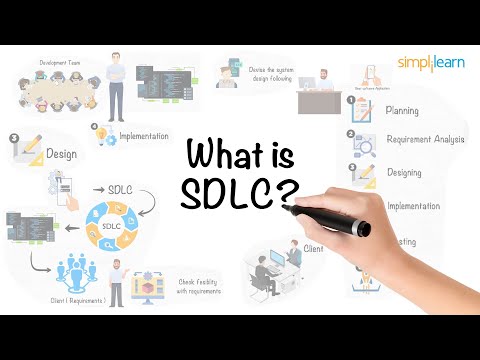
By Simplilearn Introduction To Software Development LifeCycle What Is Software Development Simplilearn by Simplilearn
The Agent Development Life Cycle Zack Reneau-Wedeen, Sierra

By AI Engineer The Agent Development Life Cycle Zack Reneau-Wedeen, Sierra by AI Engineer

Title: AI Across the Software Development Lifecycle
Channel: Sourcegraph
AI Across the Software Development Lifecycle by Sourcegraph
Tropicana: The SHOCKING Truth You NEED To Know!
AI Software Development: The SHOCKING Truth About Its Life Cycle!
The world of Artificial Intelligence (AI) is no longer a futuristic fantasy; it's the vibrant, rapidly evolving reality shaping our present and fundamentally altering our future. At the heart of this transformation lies AI software development, a complex and often misunderstood process. We are here to demystify the AI software development life cycle, offering a comprehensive look at its intricacies, challenges, and the surprising truths often obscured by the hype.
Understanding the Genesis: The Initial Conception and Planning Phase
Every remarkable journey begins with a spark of an idea, and the AI software development life cycle is no exception. The initial phase is where the seeds of innovation are sown, where the business requirements are carefully scrutinized, and the very feasibility of the project is assessed. This crucial stage sets the stage for all subsequent activities.
This phase involves a meticulous examination of the desired outcome. What problem are we trying to solve? What are the specific, measurable, achievable, relevant, and time-bound (SMART) goals? It's easy to get lost in the theoretical possibilities of AI. Therefore, a concrete understanding of the practical application is essential. This may involve market research, user interviews, and detailed competitor analyses.
Next, the project's scope is defined. What features will be included in the initial release? What functionalities will be deferred to later iterations? Defining the scope helps manage expectations and allocate resources effectively. It also helps to determine the type of AI model that will be used. Will it be a deep learning model, a natural language processing (NLP) model, or something else entirely? This is directly linked to the data requirements.
Data is the lifeblood of any AI project. The team needs to identify the sources of data, assess its quality, and determine its accessibility. Data acquisition, cleaning, and preparation can often consume a significant portion of the project's timeline.
Data Acquisition and Preparation: The Foundation of AI's Power
Once the project's parameters are in place, we're ready for the data. This is where the rubber meets the road, and the success or failure of the endeavor often hinges on the quality and quantity of the data. Poor-quality data leads to inaccurate results. Data preparation is an art form in its own right.
Data can come from various sources: internal databases, public datasets and Application Programming Interfaces (APIs) . Every data source has its own nuances. Data formats, encoding, and storage methods must be taken into account.
Data cleaning is a critical step to ensuring reliability. This encompasses handling missing values, correcting errors, and removing outliers. This is a meticulous process that requires careful attention to detail.
Data transformation involves reshaping the data to suit the requirements of the selected AI model. This may include feature engineering, scaling, and normalization. Feature engineering is a creative process, where new features are created from existing features.
Model Development and Training: The Heart of Artificial Intelligence
With data that is prepped and ready, we enter the exciting phase of AI model development. This is where the AI is trained to recognize data patterns, make predictions, and learn from its own experiences.
Model selection is a significant decision. The choice of model depends on the nature of the problem being addressed and the type of data available. Common model types include linear regression, support vector machines (SVMs), and artificial neural networks. Deep learning models, with their ability to learn from vast amounts of data, are increasingly popular.
The training process involves feeding the data to the selected model and adjusting the model’s parameters to minimize errors. This is typically an iterative process, where the model is evaluated, and the parameters are adjusted until the desired performance is achieved.
Model evaluation is an ongoing process. The model is tested on data it has not seen before to measure its performance. Metrics include accuracy, precision, recall, and F1-score. These metrics provide insights into how the model performs and identify potential areas for improvement.
Deployment and Integration: Bringing AI to Life
After the model is developed, trained, and evaluated, it's time to deploy it. Deployment involves integrating the AI model into the real-world environment. This is where the AI truly begins to demonstrate its capabilities.
There are different deployment options, including cloud-based services and on-premise deployments to your own servers. The choice depends on factors such as performance requirements, security needs, and the available IT infrastructure.
Integration with existing systems is often part of the process. This may involve creating Application Programming Interfaces (APIs) or using other methods to allow the AI model to receive input and provide outputs. This requires careful planning.
The user interface(UI) and the user experience (UX) are significant during the deployment stage. The user interface (UI) must be intuitive and easy to use. The user experience (UX) should be seamless and enjoyable.
The focus should be on ensuring that the model is integrated effectively. The model should be accessible to the end-users and that it runs smoothly in its operational environment.
Monitoring and Maintenance: Continuous Improvement
The AI software development life cycle does not end with deployment. AI models gradually degrade over time because of shifting data patterns. Monitoring and maintenance are critical to ensuring the model's continued effectiveness.
Monitoring involves tracking the model’s performance in real-time. This often involves monitoring key metrics such as accuracy, latency, and resource utilization.
If the performance begins to degrade, it may be time to retrain the model with new data. This ensures that the model remains accurate and reliable over time. The models are regularly updated with new data.
Maintenance may include updates to the underlying infrastructure or changes to the model architecture. The AI software development life cycle is not a one-time event, but an ongoing process of refinement and improvement.
The Shocking Truths: Unveiling the Unexpected Realities of AI Development
The development of AI software is frequently accompanied by a series of hidden complexities. Often, these realities are glossed over by overzealous news outlets or under-represented by product developers. These are the surprising facts that often get left unsaid:
The Data Bottleneck: The availability and preparation of data often pose the biggest hurdles. Gathering, cleaning, and appropriately formatting data can consume a significant portion of the overall project time and budget. The "garbage in, garbage out" principle is a harsh reality.
The Iterative Nature: AI development is rarely a linear process. It's an iterative journey of experimentation, evaluation, and refinement. There are no shortcuts, and setbacks are common.
The Importance of Domain Expertise: Building effective AI solutions requires a deep understanding of the specific problem domain. This means that the AI development team needs to collaborate closely with domain experts, who have a comprehensive understanding of the industry or the specific area the AI is working in.
The Human Element: Despite the advancements in AI, human involvement remains essential. From data annotation to model evaluation, AI requires human input and oversight. The role of the human in the loop is often understated.
The Cost Factor: AI software development can be expensive, especially for those lacking financial support. The costs include the cost of data acquisition, the computing infrastructure, and the expertise required to develop and maintain the AI.
The Ethical Considerations: As AI becomes more pervasive, it becomes critical to address ethical implications. This includes bias mitigation, transparency, and accountability. The ethical considerations are paramount.
The Future of AI Software Development
The future of AI software development is poised for continued growth and advancement. As cloud computing resources become more accessible, and more powerful, complex AI models will become readily available. Automated machine learning (AutoML) tools will continue to simplify the development process. However, the need for skilled AI professionals will remain high. The development cycle will continue to evolve.
AI software development is a transformative process. The rewards are worth the effort. By understanding the life cycle of AI software development, you can appreciate the incredible potential of this technology. By understanding these truths, businesses can make informed decisions.
