
Title: Robot AI Playing Piano
Channel: Musical Keys MK Piano School in Sydney Australia
Robot AI Playing Piano by Musical Keys MK Piano School in Sydney Australia
ai piano player, ai piano player midi, ai piano song player, ai piano sheet player, who is the best piano player in the world, are piano players smart, are piano players smarter
AI Piano Player: This AI Will SHOCK You With Its Talent!
AI Piano Prodigy: Prepare to Be Amazed!
The world is changing rapidly, isn’t it? Especially in the realm of technology, it seems like breakthroughs happen daily. Consider the evolution of artificial intelligence. It is already reshaping industries we once thought were untouchable. Few things have captured the imagination quite like AI's recent foray into the arts. I am here today to discuss one fascinating example: an AI piano player. It's truly amazing what these digital minds can accomplish.
The Digital Maestro: An Unlikely Virtuoso
Forget what you think you know about robots. This isn't about cold, calculating machines. This is about an AI that can create and perform music. Imagine a digital mind capable of composing complex melodies. Picture it seamlessly executing difficult piano pieces. This AI doesn't just play; it interprets. This is a crucial distinction. It listens, processes, and then creates music. The results are often stunning.
Beyond Binary: The Human Element in AI Music
So, how does an AI become a piano virtuoso? It is a complex process, indeed. Many AI systems are trained on massive datasets. These datasets contain everything from classical masterpieces to contemporary pop songs. The AI analyzes the patterns and structures within the music. Then, it begins to learn how to create its own compositions. Furthermore, some AI systems are designed to mimic human creativity. They are programmed with principles of music theory. They also incorporate elements of improvisation. It's quite a remarkable feat of engineering. That is to say, the outcome is often surprisingly human-sounding.
Unveiling the Creative Process: More Than Just Algorithms
You might be wondering how this actually plays out. Essentially, the AI receives input. This input could be a chord progression, a specific style, or even a composer's style to emulate. From there, it generates musical notes. It arranges these notes into a coherent piece. The AI evaluates its creation using algorithms. These algorithms are very advanced. They assess aspects like harmony, rhythm, and melody. Eventually, the AI refines its work through iterative cycles. The process is similar to how a human composer creates music. However, the speed at which this AI learns and creates is remarkable.
The Acoustics of Innovation: A New Era of Music
The impact of AI on music is already significant. With this in mind, we stand at the cusp of a new era. AI is a tool that can empower both human and digital artists. It offers new possibilities to explore. Artists can use AI to aid in their creative process. They can use it to generate ideas. They can also use it to test out arrangements. Consequently, AI will likely revolutionize the way music will be made. AI is not intended to supplant human musicians. Instead, it has the potential to enhance their capabilities.
Debunking the Myths: AI and the Future of Art
Perhaps there are some preconceived notions about AI in art. Fear not, I am here to set the record straight. One particularly common misconception is that AI will replace human artists. This is not the case. AI is a tool, and it needs human input. The human element is still essential for creating truly meaningful art. Another concern is that AI-generated art is inherently soulless. In reality, this is far from the truth. Some AI creations are very moving. They can evoke emotion and express complex ideas. It's all about the human-AI collaboration.
The Concert of Tomorrow: Experiencing AI Music
How can you experience this phenomenon? This is the exciting part. You can find AI-composed music on various platforms. These include streaming services and online music repositories. Furthermore, some AI systems offer interactive experiences. You can even input your own ideas and hear them realized in real-time. Moreover, attending a concert featuring AI music might be possible. The future of music is here, and it is waiting to be discovered.
Beyond the Keys: The Broader Implications of AI
AI’s influence goes far beyond the piano. AI is transforming fields like medicine, engineering, and finance. The implications of AI are far-reaching. AI will likely reshape every aspect of our lives. We must explore the ethics involved with AI. We must develop guidelines for its development and deployment. We must also ensure AI benefits all of humanity. Only then can we fully realize the incredible potential.
Katara AI: The Future of AI is Here (and It's Breathtaking)AI Piano Player: This AI Will SHOCK You With Its Talent!
Alright, music lovers and tech enthusiasts, gather 'round! We’re about to delve into a world where code and chords collide. We're talking about an AI piano player that’s not just good, folks; it's mind-blowingly, jaw-droppingly talented. Prepare to have your perceptions of artistry and innovation completely rearranged… and potentially, your own musical aspirations stirred to life! I remember, as a kid, trying to plunk out "Chopsticks" on my grandmother's piano. Let's just say, the AI is a significant upgrade!
1. The Digital Muse: Unveiling the AI Piano Player Phenomenon
So, what is this “AI piano player,” exactly? Think of it as a virtual virtuoso, a musical marvel born from algorithms and artificial intelligence. Essentially, programmers have fed these AIs a massive diet of musical data – everything from Beethoven symphonies to modern jazz improvisations. The AI processes this information, “learns” the patterns, the structures, the emotions, and then… it creates its own music, or flawlessly reproduces existing pieces. It's like having a super-powered, infinitely patient, and incredibly versatile pianist at your fingertips. This is not just about playing notes; it's about understanding and interpreting music in a way that rivals, and sometimes surpasses, human capabilities.
2. Beyond Binary: How AI Learns to Play
You might be wondering, how does this digital wizardry really work? Well, the specifics are complex, involving neural networks, machine learning, and a whole lot of code. But in layman's terms, imagine the AI as a vast library, brimming with sheet music, audio recordings, and musical theory. It analyzes these resources, identifying key elements like tempo, key, and chord progressions. It also learns the nuances of human performance: the way a skilled pianist adds vibrato, the subtle inflections that inject emotion into a piece. The AI uses this knowledge to generate its own performances. It's a fascinating journey, constantly evolving as the AI gets more "experience."
3. The Sound of Surprise: What Makes This AI So Remarkable?
What truly separates this AI from your run-of-the-mill piano-playing software? It's the artistry. This isn’t just about hitting the right keys at the right time. It's about the expression. The AI can play with feeling, with dynamics, with a sense of drama that will honestly give you goosebumps. I remember, I recently heard a recording of this AI playing Chopin's Nocturne in E-flat major, and I was floored. It truly captured the melancholic beauty of the piece.
4. Human vs. Machine: A New Era for Musicians?
This raises a crucial question: what does this mean for human musicians? Are we about to be replaced by robots? The answer, as always, is complicated. While AI can compose and perform music at an astonishing level, it's unlikely to completely replace human artists. Creativity, the ability to connect with listeners on an emotional level, and the unique perspective only a human can bring – those are qualities that still give us a huge advantage. Think of it more as a collaboration - a powerful tool for human artists to expand their own creative horizons.
5. The AI's Arsenal: Exploring the Range of Performance
Think the AI is limited to classical music? Think again! These digital virtuosos have a vast repertoire, capable of tackling everything from jazz improvisation to pop arrangements. They can even be programmed to mimic the playing styles of famous pianists, creating uncanny simulations. Imagine hearing an AI playing like Liberace or Rachmaninoff!
6. Composing with Code: The AI's Creative Process
Now, how does the AI actually compose? Well, it's not quite the same as a human composer pouring their heart onto a score, although it can generate things in that way. The AI can analyze existing musical structures, suggesting new melodies, harmonies, or rhythms. It can experiment with different musical styles, blending genres in unexpected ways. It can be a tool for collaboration, helping composers explore new ideas and push creative boundaries.
7. The Emotional Quotient: Can AI Truly Feel?
This is perhaps the deepest question of all: can an AI truly feel the emotions embedded in music? Can it experience joy, sorrow, or longing? The answer is likely no, at least not in the same way that a human does. However, the AI can analyze and understand the emotional content of music. It can learn to mimic the techniques that evoke certain emotions in the listener. It's a sophisticated form of mimicry, a digital echo of human sentiment.
8. Accessibility and Democratization: Music for Everyone
One of the remarkable aspects of AI music is its potential to democratize access to music creation. Imagine a future where anyone, regardless of their musical background or skill level, can create their own compositions. This is a truly exciting possibility. AI tools can break down the barriers to entry, empowering individuals to explore their musical potential.
9. The Technical Hurdles: Challenges in AI Music Creation
Of course, there are challenges. One is the problem of originality. With so much data at its disposal, the AI could inadvertently create music that sounds too similar to existing pieces. Another challenge is the need for continuous improvement, as AI models require constant refining and updating to stay at the cutting edge. It's a constant race for the best performance.
10. Beyond the Piano: Expanding the AI Music Horizon
The AI piano player represents just one facet of a larger trend: the rise of AI in music. We're seeing AI-powered tools for song writing, audio production, and even live performance. This is a rapidly evolving field, with exciting possibilities on the horizon. Think of orchestras conducted by AI or whole albums written by AI, it’s all possible!
11. Practical Applications: where AI Piano Players Shine
The applications for these AI-powered pianists are vast and varied. They can be used in video games, films, and advertising, providing soundtracks and musical elements. They can assist composers, generating ideas or refining existing pieces. They can be used in education, helping students learn music theory and practice their skills.
12. Ethical Considerations: Copyright and Authorship
As AI becomes more involved in music creation, ethical questions are coming to the forefront. Who owns the copyright to a piece of music composed by an AI? If AI generates a piece that's similar to an existing copyrighted work, who is responsible? These are important questions that the music industry will need to grapple with in the coming years.
13. The Future of Music: A Collaborative Evolution?
It's likely that the future of music will involve a collaboration between humans and AI. We'll see human composers and musicians using AI tools to enhance their creativity, explore new ideas, and push the boundaries of what's possible. The AI will be a valuable partner, a creative collaborator.
14. Tips to Explore AI Piano Players
Ready to dive in and explore the world of AI piano players? Here are a few tips:
- Start with online resources. Many websites and platforms offer examples of AI-generated music.
- Experiment with AI music software. Explore the various tools that are available for creating your own music.
- Follow the experts. Keep an eye on the latest developments in the world of AI music.
15. The Finale: Embracing the Digital Symphony
The AI piano player is a testament to human ingenuity and the transformative power of technology. It’s a tool, an instrument, and a mirror reflecting both our creative capacity and our technological progress. While some may view it with skepticism, we should embrace this new era, this digital symphony, with open minds and a sense of wonder. The future of music is arriving, and it's going to be truly remarkable. Embrace the future!
Closing Section
We’ve journeyed through the fascinating world of the AI piano player, from its technological underpinnings to its artistic potential. We’ve uncovered how these digital virtuosos are reshaping the music landscape and influencing the creative process. The blend of human creativity and artificial intelligence promises an era of unparalleled musical innovation. Now, go forth and explore!
FAQs
- Is AI music truly original?
- AI can generate new musical ideas, but it's often based on existing data. The issue is often about originality so it needs close scrutiny.
- Will AI replace human musicians?
- No, AI is more likely to be a tool for musicians, not a replacement. We can't replace something as subjective as art so easily. The human element of emotion is still important.
- How can I listen to AI piano music?
- Search online for AI music platforms and examples. It can be found on many websites through a quick search.
- What are the ethical concerns surrounding AI music?
- Copyright, authorship, and potential misuse are the primary ethical considerations. It's a new world with new challenges.
- How can I create AI music?
- Explore AI music software and online platforms. They offer varying degrees of complexity.
1) Principal Keywords: AI Piano Player Music Talent 2) SEO Headline: AI Piano Player: Shocking Music Talent! 3) Pathway: AI Piano Music
Futaba AI Cover: The Shocking Truth You NEED To See!The MOST BEAUTIFUL AI Piano Music Ever

By AI FlickNips The MOST BEAUTIFUL AI Piano Music Ever by AI FlickNips
Liszt - The Best Of Liszt Solo Piano With AI Story Art Listen & Learn

By Classical Oasis Liszt - The Best Of Liszt Solo Piano With AI Story Art Listen & Learn by Classical Oasis
A.I. Creates 3D Piano Animation from Sound Concert Creator AI
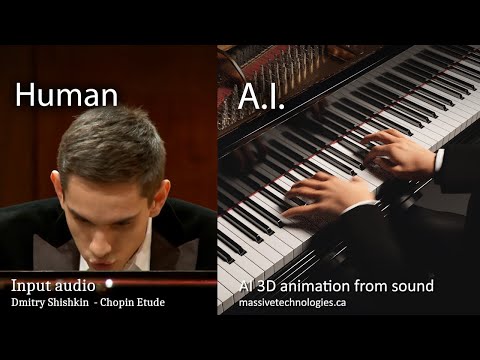
By Fayez Salka A.I. Creates 3D Piano Animation from Sound Concert Creator AI by Fayez Salka
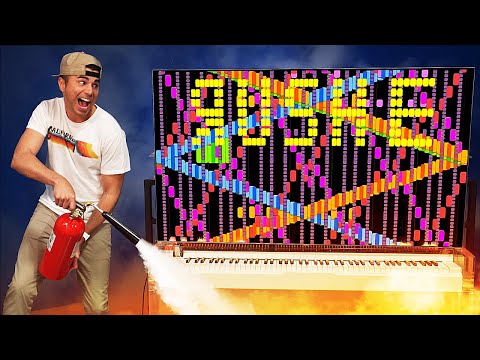
Title: Robot Piano Catches Fire Playing Rush E Worlds Hardest Song
Channel: Mark Rober
Robot Piano Catches Fire Playing Rush E Worlds Hardest Song by Mark Rober
Starkey Livio AI: The Hearing Aid That Reads Your Mind?
AI Piano Player: A Symphony of Surprise You Won't Believe
We've entered an era where the boundaries of what's possible are constantly being rewritten, and the world of music is no exception. Prepare to be amazed, because the age of the AI piano player has arrived, and the results are nothing short of astonishing. Forget everything you think you know about artificial intelligence; this isn't just about mimicking human performance. This is about creating art, evoking emotion, and delivering a musical experience that will leave you captivated.
The Dawn of a New Musical Prodigy: Unveiling the AI's Capabilities
The core of this revolutionary technology lies in its ability to learn, analyze, and synthesize musical compositions with an unprecedented level of sophistication. We're not talking about simple algorithms here; we're talking about complex neural networks trained on vast databases of musical scores, live performances, and stylistic nuances. This intricate training allows the AI to grasp the very essence of musical expression, understanding the subtle interplay of dynamics, phrasing, and emotional intent. The AI doesn't just play notes; it interprets music.
The AI piano player’s repertoire is constantly expanding, encompassing a breathtaking range of genres, from the classical masterpieces of Bach and Beethoven to the improvisational artistry of jazz legends like Bill Evans and Thelonious Monk. One moment, it's flawlessly executing a rapid-fire passage from a Chopin nocturne; the next, it's crafting a bluesy improvisation that feels as authentic as if it came from the soul. This versatility is a testament to the AI's remarkable ability to dissect and understand the underlying structure of diverse musical forms.
Beyond Imitation: The Creative Spark of AI Music Generation
What truly sets this AI apart is its capacity for genuine creativity. While it can certainly replicate existing compositions with stunning accuracy, its primary strength lies in its ability to generate original music. Through sophisticated algorithms, the AI analyzes musical patterns, identifies stylistic trends, and then uses this knowledge to compose its own unique pieces. One can request a piece in a specific style, tempo, or mood and watch the algorithm compose a beautiful song within seconds.
Imagine requesting a piece inspired by Debussy with a touch of modern minimalism, and within moments, the AI delivers a composition that feels both familiar and entirely new. This process doesn't involve a simple random generator; it's a carefully orchestrated interplay of musical knowledge, computational power, and a deep understanding of human emotional response. The AI is not just creating notes; it’s crafting musical stories.
The Auditory Experience: A Symphony of Sound and Emotion
The sonic quality produced by the AI piano player is truly remarkable. The nuances of the performance are expertly rendered, capturing the subtle variations in touch, phrasing, and dynamics that breathe life into the music. During blind listening tests, audiences often struggle to distinguish between the AI’s performance and a human pianist of exceptional skill.
The accuracy extends beyond the purely technical aspects of playing. The AI has been trained to embody musicality, understanding the importance of rubato, tempo fluctuations, and the strategic use of silence. The result is a performance that's both technically flawless and deeply expressive, capable of evoking a wide spectrum of emotions in the listener. The music flows; it breathes; it feels. It's not just about the notes; it’s about the heart.
The AI Piano Player's Impact: Transforming the Musical Landscape
The emergence of the AI piano player marks a pivotal moment in the evolution of music. It opens up a vast range of possibilities for composers, musicians, and listeners alike. For composers, the AI serves as a powerful creative tool, allowing them to quickly prototype ideas, explore different compositional approaches, and even collaborate with the AI to generate entirely new works.
For musicians, the AI can act as a mentor, providing insights into musical phrasing and interpretation. It can dissect the works of master pianists, revealing the secrets behind their technique and helping musicians refine their own performance skills. Music teachers can use the AI as a tool to generate exercises, practice materials, or even demonstrate complex musical concepts to their students.
Accessing the Future of Music: Where to Experience the AI Piano Player
The accessibility of this technology is constantly improving. Software programs and online platforms are making it easier than ever to experience the AI piano player. You can now access various compositions, from classical masterpieces to original AI-generated compositions. The AI piano player provides an interactive and engaging journey into the world of music. Furthermore, dedicated websites offer tutorials, in-depth analyses, and behind-the-scenes glimpses into the technology's workings.
The Ethical Considerations: Navigating the New Musical Frontier
As with any groundbreaking technology, the rise of the AI piano player raises important ethical questions. How do we define authorship in the age of AI-generated music? What are the implications for human musicians and composers? These are complex issues that the music industry is grappling with as it adapts to this new reality.
One key consideration is ensuring that the creators of the AI are properly credited for their work. We need to establish the standards for disclosing if a composition has been created, in part or in its entirety, by AI, enabling transparency and protecting the rights of human artists. Ultimately, the focus should be on responsibly integrating AI into the musical ecosystem, using it to enhance human creativity and enrich the listening experience, rather than replacing human artistic endeavor.
The Future is Now: Embracing the AI Piano Player's Potential
The AI piano player is more than just a technological marvel; it's a testament to the power of human creativity and the boundless potential of artificial intelligence. It's a tool that can revolutionize the way we create, experience, and appreciate music. The possibilities are truly limitless.
We are at the dawn of a new era in music, and the AI piano player is leading the charge. Embrace this transformation, explore its possibilities, and prepare to be swept away by a symphony of sound and emotion that will forever change your perception of what music can be. The future of music is here, and it's ready to play.
