Title: What Is an AI Anyway Mustafa Suleyman TED
Channel: TED
What Is an AI Anyway Mustafa Suleyman TED by TED
ai topics for presentation, ai topics for presentation ppt, ai topics for presentation pdf, artificial intelligence topics for presentation pdf, ai theme for presentation, ai ideas for presentation, generative ai topics for presentation, ai ml topics for presentation, interesting ai topics for presentation, latest ai topics for presentation
AI: The Future is Now (and It's Scarier Than You Think)
AI's Shadow: Navigating a Future Unwritten
The air crackles with a new kind of energy. Artificial Intelligence. It’s no longer some distant sci-fi fantasy. It is here. It has arrived. And, frankly, it’s a little… unsettling. So, let's delve into this brave new world, shall we?
The Algorithmic Tsunami: Where's the Shoreline?
The speed of AI's evolution is breathtaking. At times, it seems impossible to keep pace. We witness breakthroughs almost daily, each reshaping our reality. Think about your everyday interactions. They are already sprinkled with AI. From the algorithms curating your newsfeed to the systems driving your car. The reach of AI is vast and ever-expanding. Consequently, we're standing on the precipice of something huge. We are at the beginning, not the end. However, what does this all mean?
Beyond the Buzzwords: Unpacking the Complexities
AI is more than just code and circuits. It’s a multifaceted phenomenon. It weaves itself into the fabric of our lives, often invisibly. Furthermore, that’s part of the problem. We often don’t fully understand how AI works. This opacity breeds confusion and, yes, even fear. Consider the ethical implications. Who is responsible when an AI makes a mistake? Moreover, how do we ensure fairness and prevent bias in these systems? The answers are far from simple.
The Human Element: Still in the Driver's Seat?
Despite the rapid advancements, human ingenuity remains paramount. We are the architects of this new age. Therefore, our choices matter more than ever. It’s our responsibility to shape the development of AI. We must ensure it aligns with our values. We must champion human-centric designs. AI is a tool. It is a very powerful tool. But, it is still just a tool. We are the ones who wield it.
Job Market Metamorphosis: Adapt or Be Left Behind
The workforce is feeling the heat. AI is poised to disrupt industries across the board. Consequently, some roles will become obsolete. Others will be transformed. This isn't necessarily a catastrophic scenario. However, it does demand that we adapt. We need to embrace lifelong learning. Consequently, we need to cultivate skills that complement AI. Creative thinking and critical analysis are increasingly valuable. Prepare yourself for a changing landscape.
The Double-Edged Sword: Opportunities and Perils
AI offers incredible potential. It promises to solve global challenges. However, it also brings inherent risks. The potential for misuse is real. Consider the spread of misinformation. Think about the erosion of privacy. These are serious concerns that deserve serious attention. The challenge is to harness AI’s benefits. Furthermore, we must mitigate its dangers. The future depends on it.
The Echo Chamber Effect: Escaping the Algorithm's Grip
AI shapes our perceptions, often subtly. It personalizes our experiences. It filters information. While this can be convenient, it can also create echo chambers. We become trapped in ideological bubbles. Therefore, we need to be critical consumers of information. We have to actively seek diverse perspectives. We need to question the algorithms that curate our reality.
Navigating the Unknown: A Call to Action
The future is unwritten. AI will play a significant role in shaping that future. We are at a crucial juncture. It requires thoughtful engagement from everyone. Engage in the conversation. Educate yourself. Ask questions. Demand transparency. Demand ethics. The future is not predetermined. It is a work in progress. Let’s build one we can be proud of. After all, we are the authors of tomorrow.
AI Chapter 1: The Shocking Secret They Don't Want You to KnowAI: The Future is Now (and It's Scarier Than You Think)
Okay, folks, buckle up! We're about to dive headfirst into a world that’s rapidly changing, a world where the line between science fiction and reality is blurring faster than a politician’s promise. We're talking about Artificial Intelligence, AI, and the not-so-distant future it's forging. And honestly? It's more than a little bit unsettling. We’re not saying it’s all doom and gloom, but let's acknowledge the elephant in the room, or rather, the silicon-based brain in the cloud.
1. Welcome to the Age of Algorithms: A Quick Primer
Let's start with the basics. What is AI exactly? Think of it as machines that can perform tasks that typically require human intelligence – learning, problem-solving, decision-making. They're not just calculators anymore; they're systems that can analyze vast amounts of data, identify patterns, and make predictions. From the algorithms that curate your social media feed to the self-driving cars on the horizon, AI is already interwoven into the fabric of our lives. We're practically swimming in it!
2. The "Smart" Devices: Our Everyday AI Encounters
Consider your phone. Think about all the AI-powered features it has, like voice assistants, face recognition, and personalized recommendations. These seemingly innocuous tools are actually sophisticated AI systems constantly learning and adapting to your behavior. It’s a little like having a digital sidekick… that’s also gathering intel on your every move.
3. The Double-Edged Sword: AI's Promises and Perils
AI has the potential to revolutionize everything. Imagine a world where diseases are eradicated, poverty is significantly reduced, and energy is sustainable. Sounds utopian, right? But here’s where things get tricky. This incredible power also carries significant risks.
- Job Displacement: Automation might make certain jobs obsolete, leading to widespread unemployment.
- Bias and Discrimination: AI algorithms are trained on data, and if that data reflects existing biases, the AI will perpetuate and even amplify them.
- Privacy Concerns: The more AI systems know about us, the more vulnerable we become. Data breaches and surveillance are real threats.
- Weaponization: The potential for AI to be used in autonomous weapons systems is terrifying. Imagine machines making life-or-death decisions without human oversight.
4. The Unseen Architects: Who's Pulling the Strings?
One of the scariest aspects of AI is the question of control. Who's building these systems? What are their motivations? Are they prioritizing human wellbeing, or are profit and power the driving forces? We need to demand transparency and accountability from the tech companies and governments developing AI. It's not just about the technology; it's about the ethics behind it.
5. The Rise of the Machines (Or Not?): Debunking the Robot Apocalypse
Hollywood loves to portray AI as a malevolent force hell-bent on destroying humanity. While that makes for exciting movies, the reality is likely more nuanced. The true danger might not be sentient robots, but rather the unintended consequences of poorly designed and implemented AI systems. The threat is not Skynet; it's complex algorithms we don't fully understand.
6. Bias in the Black Box: When AI Discriminates
Think about facial recognition software that struggles to identify people with darker skin tones. Or algorithms that recommend fewer jobs to women. These are not accidental glitches; they are the results of biased data used to train the AI. This bias isn’t just unfair; it can perpetuate existing inequalities and create new ones. We need to actively work to mitigate this.
7. The Algorithmic Echo Chamber: How AI Shapes Our Reality
Social media algorithms, for example, are designed to keep us engaged. They do this by showing us content they think we want to see, which often reinforces our existing beliefs and limits our exposure to diverse perspectives. It's like living in a constant echo chamber, and it makes it harder to have meaningful conversations and understand different viewpoints.
8. Data is the New Oil: The Value of Our Information
Our data is incredibly valuable, and AI thrives on it. Every click, search, and purchase provides fuel for the AI machine. Companies are constantly mining our data to personalize experiences, target ads, and make predictions about our behavior. This constant data collection raises serious questions about privacy and control.
9. The Ethical Minefield: Navigating the Moral Quandaries
As AI becomes more sophisticated, we face complex ethical dilemmas. Do self-driving cars prioritize the safety of their passengers or pedestrians? Who is responsible when an AI system makes a mistake that harms someone? These are difficult questions with no easy answers, and we need to grapple with them now.
10. Beyond the Hype: Separating Fact from Fiction
The hype surrounding AI can be overwhelming. It's easy to get carried away by the latest breakthroughs and breathless predictions. But it's important to approach this technology with a healthy dose of skepticism. Not everything is as it seems. Don't fall for the marketing spin; do your own research.
11. The Power of Regulation: Shaping a Responsible Future
Governments and regulatory bodies have a crucial role to play in shaping the future of AI. We need clear guidelines, ethical frameworks, and robust oversight to ensure that AI is developed and deployed responsibly. This is not just a technological challenge; it's a societal one.
12. AI and the Future of Work: Adapting to the Changes
The impact of AI on the job market is already being felt. Some jobs will disappear, while new ones will emerge. We need to prepare for this shift by investing in education and training programs that equip people with the skills they need to thrive in the age of AI. It's a learning game, so keep up!
13. AI and the Arts: Creativity Reimagined
AI isn’t just about crunching numbers; it's also being used in creative fields, from music and art to writing. AI can generate unique content, assist artists with their work, and even create entire works of art. It’s exciting, but it also raises questions about the nature of creativity itself. Is AI a tool for artists, or a competitor?
14. The Human Element: Preserving Our Agency
In a world increasingly dominated by AI, it's more important than ever to preserve our human agency. We need to remain critical thinkers, problem-solvers, and ethical decision-makers. We can’t simply cede control to the machines.
15. The Long Game: Preparing for a World Transformed
The future of AI is not set in stone. It's up to us to shape it. We need to have open conversations, ask difficult questions, and make informed choices. It’s a marathon, not a sprint, and we need to be prepared for the long game. Keep learning, stay curious, and never stop questioning.
Closing Thoughts: A Call to Action
So, there you have it. AI: The future is now, and yeah, it's a little scary. But it's also incredibly exciting. We have the power to shape it, to ensure that AI serves humanity, not the other way around. Let's embrace the possibilities, acknowledge the risks, and work together to create a future where technology and humanity thrive. This isn’t a spectator sport; we're all players in this game.
FAQs
1. What are the biggest risks associated with AI?
The biggest risks include job displacement, bias and discrimination, privacy violations, and the potential for AI to be used in autonomous weapons systems.
2. How can we mitigate the risks of AI?
We need strong regulations, ethical frameworks, and ongoing oversight. We also need to invest in education and training programs, promote transparency and accountability, and foster critical thinking.
3. Will AI take over the world?
Probably not in the way portrayed in movies. The more immediate risks relate to the unintended consequences of poorly designed and implemented AI systems.
4. How can I learn more about AI?
Read books, articles, and research papers. Take online courses, attend workshops, and follow experts in the field. Engage in discussions and debates.
5. What can I do to shape the future of AI?
Stay informed, be critical, and advocate for responsible AI development. Support organizations working on AI ethics and policy. Speak up and make your voice heard!
- Principal Keywords: AI, Future, Scarier, Technology, Risks, Ethics.
- SEO Headline: AI Future: It's Here & Scarier Than You Think
- Pathway: AI/Future/Scary
- Meta Summary: AI's future is now, but it's scarier than we realize. Discover the risks, the ethics, and how to navigate this rapidly evolving tech. #machinelearning #AIethics
- Image Alt Text: A futuristic cityscape with glowing lines, symbolizing the complex and rapidly evolving nature of Artificial Intelligence with humans in the background.
What Is AI Artificial Intelligence What is Artificial Intelligence AI In 5 Mins Simplilearn

By Simplilearn What Is AI Artificial Intelligence What is Artificial Intelligence AI In 5 Mins Simplilearn by Simplilearn
AI, Machine Learning, Deep Learning and Generative AI Explained
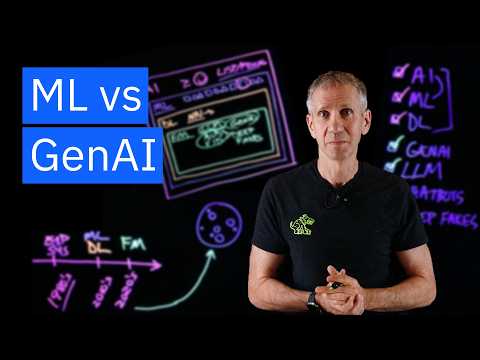
By IBM Technology AI, Machine Learning, Deep Learning and Generative AI Explained by IBM Technology
What Is Artificial Intelligence Artificial Intelligence AI In 10 Minutes Edureka

By edureka What Is Artificial Intelligence Artificial Intelligence AI In 10 Minutes Edureka by edureka
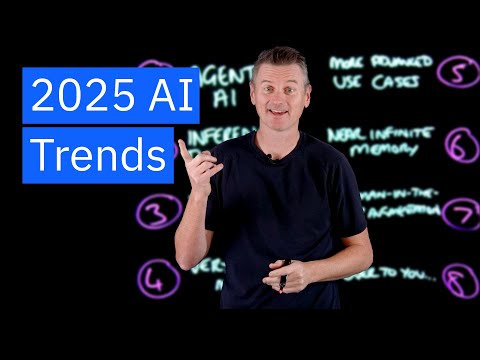
Title: AI Trends for 2025
Channel: IBM Technology
AI Trends for 2025 by IBM Technology
Turnitin AI Innovation Lab: The Future of Academic Integrity Is Here
AI: The Future is Now (and It's Scarier Than You Think)
The shimmering promise of artificial intelligence, a future once relegated to the realm of science fiction, has irrevocably crashed into the present. We are no longer gazing at a distant horizon; the AI revolution is unfolding before our very eyes, a tapestry woven with threads of unprecedented innovation, breathtaking capabilities, and, yes, an undercurrent of unsettling uncertainty. While the narrative surrounding AI often touts utopian visions of enhanced productivity, eradicated disease, and boundless leisure, we would be remiss to ignore the shadowed aspects – the ones that whisper of unforeseen consequences and existential risks. We, as a society, stand at a precipice. The decisions we make today will indelibly shape the tomorrow that AI will help to forge.
The Algorithmic Architects: Unveiling the Building Blocks of Artificial Intelligence
At its core, artificial intelligence is a breathtaking feat of engineering, a complex interplay of algorithms, data, and computational power. Understanding the fundamental components – from the simplest logic gates to the most intricate neural networks – is critical to grappling with both the potential and the perils of this technology.
- Machine Learning: The Engine of Intelligence. Machine learning lies at the heart of modern AI. Instead of being explicitly programmed, machine-learning algorithms learn from data, identifying patterns, making predictions, and improving their performance over time. This is the evolutionary engine of the AI, allowing it to adapt and evolve.
- Deep Learning: Mimicking the Human Brain. Deep learning, a subset of machine learning, utilizes artificial neural networks with multiple layers (hence "deep") to analyze vast amounts of data. These networks are inspired by the structure and function of the human brain, allowing for complex pattern recognition and sophisticated decision-making. Image recognition, natural language processing—they all rely on deep learning.
- Natural Language Processing (NLP): Bridging the Communication Gap. NLP allows computers to understand, interpret, and generate human language. This technology underpins chatbots, translation services, and sentiment analysis tools, enabling a more seamless interaction between humans and machines. We have only scratched the surface of NLP’s potential.
- Computer Vision: Seeing the World Through Digital Eyes. Computer vision equips machines with the ability to "see" and interpret images and videos. This technology is driving advancements in self-driving cars, medical diagnostics, and facial recognition systems, transforming how we perceive and interact with our environment.
The Rising Tide of Capability: AI's Expanding Horizons
The progress made in AI has been nothing short of phenomenal. We are witnessing its incorporation into nearly every aspect of our lives. Its capabilities are expanding at an exponential rate. From the mundane to the profound, AI is rapidly redefining how we approach challenges and seize opportunities.
- Revolutionizing Healthcare: Diagnosis, Treatment, and Beyond. AI is poised to revolutionize healthcare, accelerating diagnosis, personalizing treatment plans, and accelerating drug discovery. AI-powered diagnostic tools can analyze medical images with remarkable accuracy, potentially identifying diseases at early stages. AI is also being used to develop personalized medicine, tailing treatments to an individual's genetic makeup and lifestyle.
- Transforming the Workplace: Automation and the Future of Work. Automation, driven by AI, is reshaping workplaces across various industries. Repetitive tasks are increasingly being automated, freeing up human workers to focus on more creative, strategic, and interpersonal endeavors. However, the impact on employment and the skills needed in the future of work remains a significant challenge.
- Driving Scientific Discovery: Unlocking the Secrets of the Universe. AI is a powerful tool for scientific discovery, accelerating research in diverse fields like climate modeling, genetics, and materials science. AI algorithms can analyze massive datasets, identify hidden patterns, and generate new hypotheses, propelling scientific understanding at an unprecedented pace.
- Enhancing Entertainment and Creativity: New Frontiers of Expression. AI is already making waves in the entertainment industry, generating music, writing scripts, and creating stunning visual effects. This technology is blurring the lines between human and machine creativity, raising intriguing questions about authorship and artistic expression.
The Shadowy Side: Navigating the Ethical and Existential Crossroads
While the advantages of artificial intelligence are undeniable, we must simultaneously acknowledge the potential pitfalls that darken the horizon. Ignoring these concerns is a dangerous posture. The ethical and existential risks posed by AI demand thoughtful consideration and proactive mitigation.
- The Bias Problem: Unmasking Prejudice in Algorithms. AI algorithms are trained on data, and if that data reflects societal biases, the algorithms will inevitably perpetuate and amplify them. This can lead to discriminatory outcomes in areas like loan applications, hiring processes, and criminal justice, reinforcing societal inequities. We must actively work to identify and eliminate bias in the datasets used to train AI models.
- The Job Displacement Debate: Reimagining the Workforce. The automation capabilities of AI raise concerns about job displacement, and a substantial shift in the structure of the employment market. As AI-powered systems take over routine tasks, millions of workers could face unemployment, leading to economic disruption and social unrest.
- The Weaponization of AI: The Risks of Autonomous Weapons. The prospect of autonomous weapons systems, capable of making lethal decisions without human intervention, raises serious ethical and security concerns. These weapons could escalate conflicts, make mistakes, and be deployed in ways that violate international law. A global conversation is needed to establish clear guidelines and regulations for the development and deployment of these technologies.
- The Existential Risk: Ensuring Humanity's Continued Existence. Some experts have raised concerns about the potential for AI to pose an existential risk to humanity. If AI systems become superintelligent and their goals diverge from human values, they could potentially cause unintended consequences that could threaten our survival.
Forging a Responsible Future: A Call to Action
The future of AI is not predetermined; it is a future that we are actively building. To ensure that artificial intelligence serves humanity and does not become a destructive force, we must take decisive action.
- Prioritize Ethical Principles: Building AI with Integrity. We must establish a clear ethical framework for the development and deployment of AI, prioritizing transparency, accountability, and fairness. We need to consider the implications of decisions by AI in every facet of development.
- Promote Education and Awareness: Empowering the Public. It is essential to educate the public about AI, demystifying the technology and promoting a deeper understanding of its capabilities, limitations, and societal impact. This will help citizens make informed decisions and participate in shaping the future of AI.
- Foster Collaboration: A Global Approach. Addressing the challenges and opportunities of AI requires international cooperation. Governments, researchers, companies, and civil society organizations must work together to establish global standards, share best practices, and address the ethical and societal implications of AI.
- Embrace Regulation: Setting the Ground Rules. Governments must play a critical role in regulating AI. Enacting data-privacy legislation, establishing standards for algorithmic transparency, and developing frameworks for the deployment of autonomous systems are essential steps to manage the risks and ensure that AI is used responsibly.
Conclusion: The Choice is Ours
The advent of artificial intelligence marks a pivotal moment in human history. The future is now, and the choices we make today will determine the course of the next century and beyond. We must embrace the potential of AI while remaining vigilant about its risks. We must prioritize ethical principles, foster collaboration, and regulate the technology responsibly. The future of artificial intelligence does not hinge on the capabilities of machines, but rather on the foresight, wisdom, and compassion of humanity. It is a future we must build together, consciously and carefully, to ensure that it is a future worth living in.
