
Title: Will These New AI Tools Make Songwriters Irrelevant In 2025
Channel: Rick Beato
Will These New AI Tools Make Songwriters Irrelevant In 2025 by Rick Beato
ai tools for music production, ai tools for music, ai tools for music creation, ai tools for music marketing, ai tools for music generation, ai tools for music education, ai tools for music production free, ai tools for music editing, ai tools for music mixing, ai tools for music transcription
AI Music Revolution: Tools That'll Blow Your Mind!
Unleash the Sound: Diving Headfirst into the AI Music Revolution
The world of music is undergoing a seismic shift. Artificial intelligence is no longer a futuristic fantasy. Instead, it's a present reality, actively reshaping how we create, consume, and experience music. This isn't just about generating generic background tracks anymore. We're talking about tools that genuinely redefine the creative process. The future of music is here, and it's powered by AI.
The Symphony of Code: AI's Role in Composition
Imagine crafting an entire symphony without formal musical training. Sounds impossible, right? Well, not anymore. AI-powered composition tools are democratizing music creation. They empower anyone with a creative spark to bring their musical visions to life. These aren't just simple loop generators. They're sophisticated platforms that understand music theory. They create complex arrangements quickly and efficiently. They can also adapt and evolve existing melodies.
For instance, think about applications analyzing vast datasets of musical styles. They learn the nuances of jazz, the energy of rock, and the elegance of classical. Subsequently, they can generate original compositions in those genres. It's an amazing feat of technology, if you ask me. They can even help overcome writer's block by suggesting chord progressions. Moreover, they can offer fresh rhythmic ideas. Consequently, this fuels creativity.
Beyond the Notes: AI-Driven Sound Design
The impact of AI extends beyond just composition, of course. It's also revolutionizing sound design. Imagine creating unique sound effects with unprecedented ease. AI tools are enabling musicians to manipulate audio in ways previously unimaginable.
Consider algorithms capable of isolating instruments from a mix. Or, think about tools that can automatically clean up noisy recordings. Furthermore, you can imagine AI that perfectly matches the tempo of samples. The potential is truly limitless. So, sound designers and music producers are using these tools to push creative boundaries. In turn, they are producing music that is more immersive. As a result, the soundscapes are more engaging.
The Art of the Algorithm: AI's Impact on Music Production
AI is not just a creative tool; it's also a powerful assistant in the production process. AI-powered mastering tools can instantly optimize tracks for different platforms. This saves time and money. Moreover, these tools analyze audio with precision. They make subtle adjustments that enhance the overall sound quality. They are truly remarkable.
Furthermore, AI can automate repetitive tasks. This then frees up producers to focus on the artistic aspects of music creation. For example, AI can handle automatic mixing. It can also generate vocals and instruments. It can remove unwanted noise automatically. As well as, it can adjust levels and effects. In other words, the entire workflow is streamlined.
The Future is Now: The Evolution of AI Music
The AI music revolution is still in its early stages. However, the rate of progress is astonishing. We can expect even more sophisticated tools. Also, we can anticipate more creative possibilities. Moreover, the question arises; where will this all lead? AI will likely become even more integrated. It will intertwine with the music creation process. The future is bright. Furthermore, expect more collaborative efforts between humans and AI. As a consequence, a new era of music will be born.
Embrace the New Wave: Your Role in the Revolution
The rise of AI music isn't just for tech enthusiasts. It affects everyone who loves music. It's a chance to discover new sounds. It's also an opportunity to explore your creative potential. Start researching. Experiment with different tools. Most importantly, embrace the change.
Perhaps you are a seasoned musician. Or maybe this is your first foray into music creation. This is an exciting time to be involved in music. The tools are accessible. The possibilities are endless. The future of music is collaborative. It is also innovative. It is also, undeniably, exciting.
Clean AI: The Future is Now (and It's Spotless)AI Music Revolution: Tools That'll Blow Your Mind!
We're standing at the precipice of something huge, a sonic boom of innovation that's about to redefine how we create, consume, and experience music. Forget the dusty old stereotypes; we're not just talking about robots churning out elevator Muzak. We're talking about an AI Music Revolution! Prepare to have your ears tickled, your assumptions shattered, and your creative juices flowing like a river in springtime. This is the future, and it sounds phenomenal.
The Symphony of Silicon: Why AI Music is Exploding Now
For years, we've been hearing whispers – hints and promises – about AI's potential in music. Now, the whispers are a roar. Why the sudden surge? It’s like the perfect storm brewing in the music industry. Improvements in processing power, coupled with advancements in machine learning, have created fertile ground. But beyond the tech, the demand is there. Indie artists need affordable tools. Major labels seek new avenues. And frankly, we all crave novelty. It's a vibrant, dynamic ecosystem, ready to be explored.
Unveiling the Maestros: Top AI Music Generation Tools
Let's dive into the good stuff – the tools that’ll actually blow your mind. These aren’t just toys; they're instruments. And the musicians? We are, in collaboration with intelligent algorithms.
Amper Music: Think of it as your personal composer. Feeling a blues vibe? Amper will generate a track, tailor-made based on your prompt, and you can then tweak the length, instruments, and the overall feel. It’s like having your musical muse on call, always ready to jam.
Jukebox by OpenAI: This one's a bit more experimental, but astonishing. Jukebox can create songs with vocals in various styles, emulating the voices of existing artists. It's not always perfect, but it's raw power. It feels like peeking into the future.
AIVA (Artificial Intelligence Virtual Artist): Marketed towards music professionals, AIVA can compose music in a variety of styles (classical, cinematic, etc.). It learns the nuances of harmony and melody, crafting original scores.
Boomy: Imagine being able to generate an entire song, and then sell it, all within a matter of moments. Boomy provides this functionality, letting you easily create and share your tracks across the web.
Soundful: Utilising AI to generate music for a variety of purposes, Soundful is easy to understand and it delivers on its promise of providing you with royalty-free music.
From Pixels to Playlists: How AI is Changing the Creative Process
Forget the notion of AI replacing human musicians. This isn't about robots taking over. It is about augmenting, assisting, and accelerating the creative process. Think of it as having a super-powered, infinitely patient collaborator. AI can help with tasks that used to eat up precious time: composing chord progressions, creating drum loops, generating vocal melodies, and even mastering tracks. It’s like having a virtual assistant for your musical journey, enabling you to focus on the artistry.
Deconstructing the Algorithms: Understanding How AI Music Works
How do these tools actually work? It's a fascinating blend of machine learning, data analysis, and a dash of magic. AI algorithms are "trained" on vast datasets of music, learning patterns, styles, and structures. They identify recurring themes and then generate new music based on that knowledge. Think of it as a super-powered pattern recognition system.
It's important to remember that AI doesn’t "understand" music in the same way a human does. It's more of an incredibly sophisticated mimic, but so much more efficient to produce content from scratch. The beauty lies in the interaction between the human and the machine. You provide the ideas, and the AI helps you realize them.
AI in Action: Real-World Examples of Music Revolution
The AI music revolution isn’t just theoretical; it's happening now. We're seeing it in:
Film and Video Game Scores: AI is increasingly composing scores for indie films and video games, offering cost-effective and creative solutions.
Personalized Music Experiences: Streaming services are using AI to curate playlists and recommend music based on your listening habits, meaning your ears are always being introduced to fresh sounds.
Artist Collaborations: Artists are partnering with AI to push creative boundaries, experimenting with new sounds and styles. This kind of blending is what makes me excited.
The Ethical Echoes: Navigating the Copyright Conundrums
As with any technological breakthrough, the rise of AI music raises ethical questions. Who owns the copyright to music generated by an AI? How do we protect artists’ rights? These discussions are ongoing, and there are really no easy answers. It's a collaborative process of trying to understand and set the rules as we go along.
Expanding the Horizon: The Future of AI in Music Production
The future is bright, and it's sounding pretty funky. We can expect even more sophisticated AI tools, capable of creating music that is indistinguishable from human-composed tracks. We'll see AI more deeply integrated into music education, empowering aspiring musicians of all skill levels. We'll discover new musical genres, as AI helps us push the boundaries of sounds and styles.
Collaboration over Conflict: The Harmonious Partnership
The most exciting aspect? It's the potential for collaboration. The musicians of tomorrow won't be replaced by AI; they'll be collaborating with AI. They'll be using these tools to amplify their creativity, explore new ideas, and connect with audiences in ways that were never before possible.
Overcoming the Obstacles: Challenges and Their Solutions
While the future is promising, there are challenges. The technology is still evolving, and the quality of AI-generated music can vary. Concerns about copyright and ownership need to be addressed. But we are already seeing improvements. These are challenges we can solve.
Unleashing Your Inner Maestro: Getting Started with AI Music
Ready to dive in? It’s easier than you think. Start small. Experiment with the free trials offered by various AI music tools. Try different prompts. Don’t be afraid to make mistakes. The best music often comes from the most unexpected places. It is about experimentation.
The Sound of Community: Connecting with the AI Music Movement
The AI music movement is a vibrant and growing community. Connect with other creators online. Share your experiences, and learn from each other. It’s a fantastic time to get involved.
The Uncharted Territories: Where We're Headed in AI Music
The uncharted territories are the most exciting parts of this story. Imagine AI analyzing your brainwaves to generate music tailored to your specific mood, or AI creating interactive musical experiences that change based on your reactions. The possibilities are endless, and the limits are defined only by our imagination.
Why Now? The Perfect Storm Rages
The combination of technological advancements, the rise of the creator economy, and a growing demand for accessible music tools makes this the perfect time for the AI Music Revolution to flourish. We're witnessing a paradigm shift, and it's thrilling to be part of it.
Final Thoughts: Embracing the Symphony of the Future
The AI Music Revolution isn't just about technology; it's about human creativity at its finest, enhanced by technology. It's about collaboration, innovation, and the limitless potential of sound. Embrace the future, and don’t be afraid to experiment. The music is waiting.
FAQs
Is AI music "real" music?
That's a tricky question! It's generated by algorithms, yes. But it's based on the creative input of humans. It's a partnership, really. The end product is music, and that's what matters.
Will AI replace human musicians?
I do not think so, but it will change the role of human musicians. It doesn't replace, but it serves as a tool. AI can do a lot of the repetitive tasks, freeing up musicians to focus on artistry.
Is it possible to copyright AI-generated music?
That's a legal gray area. Copyright law is still catching up. The prevailing view is the person who is the key, who uses the tool should be the owner.
How do I get started with AI music?
Start with the free options! Many tools offer trial accounts. Experiment with prompts, and have fun. Don't be afraid to try new things.
What are the best AI music tools for beginners?
Amper Music and Boomy are intuitive and fun! Soundful is another great one, easy to understand and use. Also, YouTube tutorials can be helpful!
Closing Section
We've only scratched the surface of what's possible with AI music. The next few years are going to be a wild ride, filled with stunning new sounds, mind-blowing collaborations, and a complete rethinking of how we listen to, create, and experience music. Jump in; the water's fine, and the music, well, it’s revolutionary!
- Principal Keywords: AI Music Creation Tools, Revolution
- SEO Headline: AI Music Tools: Revolutionize Your Sound!
- Pathway: AI Music Tools
- Meta Summary: Explore the AI Music Revolution!
9 AI Tools To Give Your Music An Unfair Advantage

By Damian Keyes 9 AI Tools To Give Your Music An Unfair Advantage by Damian Keyes
I tried 100 AI Music Tools These are the ONLY ones worth using

By Music By Mattie I tried 100 AI Music Tools These are the ONLY ones worth using by Music By Mattie
Convert Text to a Song
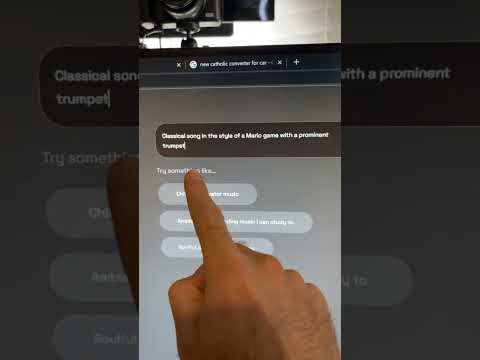
By Matty McTech Convert Text to a Song by Matty McTech

Title: My AI mixing and mastering is the best way to mix this music artists song bigbadddwolfe music
Channel: CarMaster
My AI mixing and mastering is the best way to mix this music artists song bigbadddwolfe music by CarMaster
Portfolio AI: Unleash Your Creative Genius (and Skyrocket Your Earnings!)
AI Music Revolution: Tools That'll Blow Your Mind!
The air crackles with a new energy, a symphonic shift. The music industry, a landscape once etched in vinyl and defined by human hands, is undergoing a profound transformation. At the vanguard of this evolution stands Artificial Intelligence, reshaping the very essence of how we conceive, create, and consume music. We, the music enthusiasts, are witnessing a renaissance, a sonic upheaval that promises to democratize creativity and unlock uncharted territories of auditory artistry. Forget the limitations of the past; a new era of boundless potential has dawned, and the tools are ready to ignite your imagination.
Unleashing the Algorithmic Muse: AI-Powered Composition
For centuries, composers have grappled with the intricacies of melody, harmony, and rhythm. Today, AI provides a digital muse, a tireless collaborator capable of generating original musical content with unprecedented speed and versatility. These aren't simple MIDI files; we're talking about sophisticated algorithms capable of crafting bespoke compositions tailored to your specific vision.
Amper Music: A pioneer in accessible AI music generation, Amper Music empowers anyone to create royalty-free music for videos, podcasts, and more. The platform offers a wide range of musical styles and moods, allowing users to specify tempo, instrumentation, and even the emotional tone they wish to evoke. Imagine needing background music for a documentary. With Amper Music, you can create a fully customized score in minutes.
AIVA (Artificial Intelligence Virtual Artist): AIVA goes beyond basic generation, focusing on creating sophisticated orchestral and film scores. Trained on vast datasets of classical music, AIVA possesses a deep understanding of musical theory and composition. It can generate intricate pieces with complex harmonic structures, making it an invaluable tool for filmmakers, game developers, and anyone seeking professional-quality music. Think of it as having an entire orchestra at your fingertips.
Jukebox (OpenAI): Developed by OpenAI, Jukebox represents a leap forward in AI-driven music creation. It can generate music in a variety of styles, from pop to country, and even attempt to mimic the voices of specific artists. While still in its early stages, Jukebox demonstrates the incredible potential of AI to not just compose music, but also to understand and recreate the nuances of human singing and instrumental performance.
Beyond Composition: AI as a Production Partner
The revolution isn't confined to composition. AI is rapidly transforming the production process, offering powerful tools to refine and enhance your music. These tools are not just about automation; they're about empowering creators with new levels of control and precision.
LANDR: This widely-used platform employs AI-powered mastering to polish your tracks to professional standards. LANDR analyzes your audio and automatically applies a suite of mastering techniques – equalization, compression, stereo widening – to optimize your music for various platforms and listening environments. This means a polished, radio-ready sound with minimal effort, allowing you to focus on the creative process.
iZotope RX: A cornerstone of audio restoration, iZotope RX uses AI to repair and enhance audio recordings. From removing unwanted noise, clicks, and hums to isolating and improving vocal performances, RX is an indispensable tool for producers and sound engineers. The AI-powered features provide a level of precision and effectiveness previously unattainable, breathing new life into damaged recordings and elevating the overall quality of your work.
Waves Clarity VX: Waves Clarity VX leverages AI to clean up individual audio tracks. This tool separates vocals from complex mixes, removes unwanted noise, and provides remarkable clarity and presence. It is used by audio engineers worldwide to enhance the sound quality of vocals and recordings.
The Algorithmic Symphony: AI in Performance and Live Music
The impact of AI extends beyond the recording studio, influencing the live music experience in exciting and unexpected ways. From enhancing performances to adapting to audiences in real-time, AI is transforming the concert landscape.
AI-Driven Instruments: Imagine a guitar that can learn your playing style and dynamically adjust its sound, or a drum machine that generates fills and rhythms based on your input. Developers are actively creating AI-powered instruments. These new tools open up a world of possibilities for improvisational performance and sound design.
Real-Time Sound Design and Mixing: AI is being used to create dynamic and adaptive soundscapes for live performances. By analyzing the music, the environment, and the audience's reaction, AI can adjust the sound in real time, ensuring the optimal audio experience for every listener.
Adaptive Lighting and Visuals: Complementing the audio revolution, AI is also being used to create dynamic and responsive visual experiences. AI algorithms can analyze the music and generate corresponding lighting effects and visual projections, enhancing the immersive quality of live concerts.
The Future is Now: Embracing the AI Music Revolution
The emergence of AI in music is more than just technological progress; it's the beginning of a new artistic frontier. It fosters democratization, providing access to tools that were once exclusively within the domain of professionals. It enables new forms of creative expression, allowing musicians to explore uncharted sonic territories. It changes how we perceive and engage with music itself.
Democratizing Accessibility: AI removes many of the financial and technical barriers to entry in music production. Affordable and accessible AI tools empower creators of all skill levels to record, master, and distribute their music independently.
Unlimited Creative Potential: The ability to generate and manipulate sounds in new ways fuels innovative and unique creative endeavors. Musicians can now access a vast array of tools that enhance their creativity.
New Forms of Collaboration: AI tools facilitate new forms of collaboration between humans and machines. The AI acts as a creative partner, collaborating with musicians to produce sounds.
Navigating the New Sonic Landscape
As you embark on this exciting journey, keep these considerations in mind:
- Embrace Experimentation: Don't be afraid to explore the possibilities. Experiment with different AI tools and techniques. Try composing in new musical styles or sounds.
- Focus on Your Unique Voice: While AI can generate music, your artistic vision and personal touch are still essential.
- Stay Informed: The field of AI in music is constantly evolving. Stay informed about the latest developments and tools to stay at the forefront of the sonic revolution.
- Be Ethical: Consider the ethical implications of using AI, such as copyright, originality, and the potential displacement of human musicians.
The AI music revolution is here. Embrace the tools, explore the possibilities, and prepare to be amazed by the boundless potential of music in the digital age. The stage is set for a new era of sonic innovation, so let the music begin!
