
Title: Professor Answers AI Questions Tech Support WIRED
Channel: WIRED
Professor Answers AI Questions Tech Support WIRED by WIRED
ai response to questions, ai answers to questions, ai response to interview questions, ai to answer questions from image, ai to answer questions from pdf, ai to answer questions from video, ai to answer questions on screen, ai to answer questions during interview, ai to answer questions based on pdf, ai to answer questions from text
AI: The Shocking Truth They DON'T Want You to Know!
AI: Whispers of a Revolution - What's REALLY Going On?
Let's be honest, the world feels different. It's buzzing with a new energy. This energy comes from something we call Artificial Intelligence, or AI. It's changing everything, rapidly. You've probably heard the hype. You might even feel overwhelmed. But what’s the real story? What are they not telling us?
The Unseen Hand: AI's Quiet Takeover
AI isn’t some distant future fantasy. It's already here. Furthermore, it's woven into the fabric of our daily lives. Think about your social media feed. Consider the suggested products you see online. Reflect on the voice assistants that respond to your every command. AI algorithms are quietly shaping our experiences. Consequently, they're starting to influence decisions we wouldn't even suspect.
Because technology evolves so fast, sometimes the biggest changes are the least obvious. AI is evolving at an exponential rate. In short, it's almost impossible to keep up. This rate of evolution presents both immense opportunities and significant challenges.
Decoding the Code: Understanding the AI Landscape
The term “AI” is broad. Therefore, it covers a wide range of technologies. At its core, AI focuses on machines mimicking human intelligence. Several sub-fields exist within AI. For example, machine learning allows systems to learn from data. Deep learning uses complex neural networks. Natural language processing lets machines understand and respond to human language.
So, what does all this mean for you? It means things are changing. It also means you need to be aware. Before you know it, AI could be affecting everything.
The Double-Edged Sword: AI's Promise and Peril
AI offers incredible possibilities. Imagine a world with personalized medicine. Picture self-driving cars that reduce accidents. Envision solutions to complex global problems, like climate change. AI promises to make life easier, safer, and more efficient.
However, there are also shadows. AI systems can perpetuate existing biases. They may also amplify them. Job displacement is a legitimate concern. The ethics of AI development are complex. Therefore, we need to address these challenges head-on.
Beyond the Headlines: The Reality of AI's Impact
The media often focuses on sensationalism. However, the reality of AI is far more nuanced. It's not about robots taking over the world. It's about incremental changes. These changes are subtly reshaping how we live and work.
For instance, AI is already optimizing supply chains. It is also streamlining customer service. AI is being used for medical diagnosis. AI also assists in scientific research. These shifts are happening now. Moreover, they’re having a real impact on various industries.
Navigating the Future: Preparing for the Age of AI
The future will undoubtedly be influenced by AI. It's essential to prepare. This involves several steps. First, learn about AI. Understand the basic concepts. Then, stay informed about current developments.
Consider developing new skills. Critical thinking, problem-solving, and creativity will be vital. Adaptability will also be key. The world is constantly evolving.
Transparency and Trust: The Need for Responsible AI
We need to demand transparency. Specifically, we need to understand how AI systems work. We must also hold developers accountable. Bias must be addressed. Ethical considerations must be prioritized.
Trust is an essential ingredient. Therefore, we need to build trust in AI systems. This can be achieved. It necessitates open dialogue. It also needs collaboration between experts, policymakers, and the public.
The Bottom Line: Embracing the AI Revolution
AI is not something to be feared. It's a powerful tool. How we embrace it will define our future. We must be informed. We must be proactive. We must also be ethically-minded.
So, don't just sit back. Get involved! Explore AI's potential. Shape its future. The future is happening now. Therefore, it is up to us to define it. Moreover, it's our chance to ensure it is a future we all want to live in.
gLing.ai: The AI That's About to Blow Your Mind!Here's an attempt:
AI: The Shocking Truth They DON'T Want You to Know!
Hey everyone, buckle up! We're diving headfirst into the wild, unpredictable waters of Artificial Intelligence. It’s the buzzword of the century, plastered across every headline, and subtly (or not-so-subtly) influencing almost every facet of our lives. But are we truly getting the full picture? Are we being told everything? I'm going to level with you: probably not. And that's what we're here to unpack today. We're going to peel back the layers of hype and fear and get real about the shocking truth about AI that some folks would rather keep hidden.
1. The Glitz and Glamour of AI: What We Think We Know
Let's be honest, AI sounds amazing. Think of the sci-fi movies we've all devoured! Robots that can do everything, solve all the world's problems, and essentially usher in a utopia. The images of self-driving cars, personalized medicine tailored to your DNA, and instant translation are enticing, aren’t they? It's like the future has arrived, and it’s sparkling! But like any shiny object, there's often a shadow lurking beneath the surface. This is where the "they" come in. The corporations, the governments, the power players, the ones who are shaping the narrative.
2. The Illusion of Omnipotence: AI Isn't Magic
One of the biggest misconceptions perpetuated is that AI is all-knowing and all-powerful. It isn't. It’s not a magical being that can do anything we want. It's more like a highly sophisticated calculator on steroids. It excels at processing data, recognizing patterns, and performing specific tasks incredibly quickly, but it's still based on the information we feed it. It's like giving a brilliant chef a recipe and the best ingredients, but the chef can only cook that one dish. Anything beyond requires new instructions or the creation of a different "model."
3. The Data Dependence: Garbage In, Garbage Out (And a Lot of Garbage is Going In)
Want to know the biggest secret of AI? It's all about the data. The quality, quantity, and biases within the data sets are everything. Imagine trying to teach a child about the world with only biased information. That's what happens when AI is trained on flawed or limited data. We're talking about algorithms that can perpetuate and amplify existing societal inequalities. For example, imagine an AI trained on hiring data from a company that has historically discriminated against certain groups. The AI will likely continue those discriminatory practices. The implications are vast, and frankly, pretty scary.
3.1 The Bias Problem: Algorithmic Discrimination
This is a biggie. AI can be remarkably efficient at finding patterns, including patterns of bias. These biases can creep into the systems subtly and insidiously, mirroring and even exacerbating prejudice within our societies. It's like a digital echo chamber that amplifies existing discriminatory trends.
4. The Black Box Problem: We Don't Always Know How It Works
Here's another truth that's rarely discussed: even the people who create the AI don't always fully understand why it makes the decisions it does. Deep learning models, for example, are like giant, complex neural networks. They can churn out incredible results, but the specific process by which they arrive at those results can be opaque. This "black box" effect makes it difficult to identify and correct errors, understand the underlying reasoning, or even hold the AI accountable for its actions.
5. The Job Apocalypse (Maybe): The Automation Factor
Let's talk about the elephant in the room: jobs. AI and automation are rapidly changing the landscape of work. We're already seeing it in manufacturing, customer service, and even creative fields. This isn't just about robots replacing factory workers; it's about algorithms taking over tasks previously performed by professionals. The question isn't if jobs will be displaced, but when and how much.
5.1 The Upskilling Imperative: Adapting to Change
The good news? It's not all doom and gloom. The rise of AI also creates new opportunities, and the human workforce can evolve if we focus on upskilling and adapting to the changing demands of the market. That means prioritizing skills like critical thinking, creativity, and complex problem-solving, which are more difficult for AI to replicate.
6. The Privacy Paradox: Your Data is the New Oil
We live in a data-driven world, and your personal information is the currency of the 21st century. AI thrives on data, which means companies are constantly collecting and analyzing our every move. From your online browsing history to your location data, everything is up for grabs. How do we protect our privacy in an age where data collection is the norm? It's a fundamental question that we need to grapple with.
7. The Ethical Minefield: Who is Accountable?
As AI becomes more sophisticated, the ethical implications of its use grow exponentially. Who is responsible when an AI system makes a mistake? What happens when an autonomous vehicle causes an accident? Who is liable? These are complicated questions, and there are no easy answers. We need to establish clear ethical guidelines and regulations to govern the development and deployment of AI.
8. The Myth of Sentience: Is AI Conscious?
This is a question that sparks massive debates. Despite what you might have seen in films, current AI is not actually conscious. It's important to differentiate artificial intelligence from artificial consciousness. The latter is a far more complex concept.
9. The Power Elite: Concentrated Control
Who controls the AI? Mainly large corporations and governments. This concentration of power raises serious concerns about the potential for misuse and abuse. We need to ensure that AI is developed and deployed in a way that benefits everyone, not just a select few.
10. The AI Arms Race: Military Applications
The military applications of AI are a particularly concerning area. Autonomous weapons systems, or "killer robots," raise profound ethical and strategic questions. The potential for these systems to make life-or-death decisions without human intervention is terrifying. International regulations and treaties are crucial to prevent an AI arms race.
11. The Hype Cycle: Separating Fact from Fiction
The media thrives on hype, and AI is definitely a hot topic. We need to be skeptical of the breathless headlines and overblown claims. It's important to approach the subject with a critical eye and separate the genuine advances from the marketing spin.
12. The Unseen Costs: Energy Consumption and Environmental Impact
Building and running AI systems requires massive computing power, which has a significant environmental impact. The energy consumption of AI models can be enormous, contributing to carbon emissions. We need to consider the environmental costs of this rapidly accelerating technology.
13. The Future is Now: What Can You Do?
So, what can you do? Be informed. Educate yourself. Ask questions. Demand transparency and accountability. Support policies that promote ethical AI development. The future of AI isn't predetermined. We all have a role to play in shaping it.
14. The Importance of Human Oversight
We must maintain human oversight of AI systems, especially in critical areas. AI can be a powerful tool, but it should always be a tool for humans, not a replacement for human judgment, empathy, and ethics.
15. The Ongoing Evolution: Keeping Up with the Changes
AI is constantly evolving. New breakthroughs are happening all the time. It's a fast-moving field, and it's essential to stay informed. Regularly revisiting this topic and engaging with the evolving discourse is the best way to stay ahead.
In Conclusion:
AI is a transformative technology with incredible potential, but it's not a magic bullet. There are significant challenges and risks that we must address proactively. By understanding the Shocking Truth They DON'T Want You to Know – the biases, the limitations, the ethical considerations – we can help shape the future of AI in a way that benefits everyone. It’s up to us to safeguard against the potential pitfalls and ensure this powerful technology serves humanity, not the other way around.
Frequently Asked Questions (FAQs):
Is AI going to take over the world? Probably not in the way you think. Current AI lacks self-awareness and the capacity for autonomous action on a global scale. The biggest risk is not a robot uprising, but the misuse of AI by humans.
Should I be worried about losing my job to AI? Some jobs are more susceptible to automation than others. Focus on developing skills that are difficult for AI to replicate, such as critical thinking, creativity, and complex problem-solving.
How can I protect my privacy in the age of AI? Be mindful of the data you share online. Review your privacy settings on social media platforms and other websites. Support legislation that strengthens data privacy regulations.
Are there any positive aspects of AI? Absolutely! AI has the potential to revolutionize healthcare, education, and many other fields. It can help us solve complex problems and improve our quality of life.
What can I do to stay informed about AI? Read reliable news sources. Follow experts and thought leaders in the field. Engage in discussions and debates about the ethical and societal
Can AI Answer Catholic Questions

By Breaking In The Habit Can AI Answer Catholic Questions by Breaking In The Habit
Can Chat GPT AI Answer Life's Most Difficult Questions in 1 Word The Answers will Shock You

By Lily Jay Can Chat GPT AI Answer Life's Most Difficult Questions in 1 Word The Answers will Shock You by Lily Jay
How AI Will Answer Questions We Havent Thought to Ask Aravind Srinivas TED

By TED How AI Will Answer Questions We Havent Thought to Ask Aravind Srinivas TED by TED
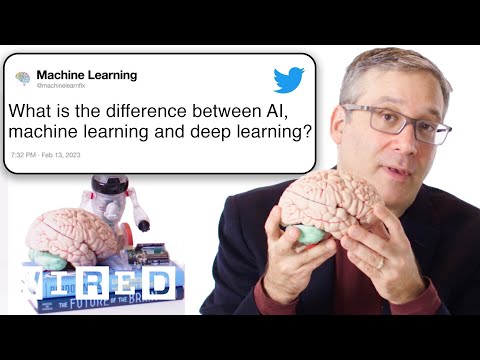
Title: AI Expert Answers AI Questions From Twitter Tech Support WIRED
Channel: WIRED
AI Expert Answers AI Questions From Twitter Tech Support WIRED by WIRED
AI Bang: The Shocking Truth You Need to See!
AI: The Shocking Truth They DON'T Want You to Know!
The digital revolution is upon us, and at its heart beats Artificial Intelligence (AI). It’s a term bandied about with increasing frequency, a buzzword interwoven into the fabric of daily conversation. Yet, beyond the glowing headlines and futuristic promises, lies a stark reality, a truth often obscured by hype and misunderstanding. We, at the forefront of understanding and navigating this technological shift, are here to illuminate the often-hidden facets of AI, the aspects deliberately kept from broad public knowledge.
The Illusion of Sentience: Unmasking the Mimicry
One of the most pervasive misconceptions is the potential for current AI to achieve genuine sentience. The allure of the sentient machine, capable of independent thought and emotional experience, fuels science fiction and, regrettably, much mainstream commentary. The truth, however, paints a significantly different picture. The most advanced AI operating today, even the sophisticated language models capable of crafting eloquent prose and engaging in convincing dialogue, are fundamentally sophisticated pattern-recognition systems.
These systems, trained on massive datasets, excel at identifying correlations and replicating them. They can convincingly mimic human language, understanding the nuances of context and even deploying humor. This proficiency leads to the illusion of understanding, the perception that the AI truly "gets" what it's discussing. The reality is that AI is a highly advanced imitator, not an independent thinker. It doesn’t feel joy, sadness, or any other emotion. It merely processes and responds to prompts based on the patterns it has learned. Framing it as something far more than it is, something capable of consciousness, creates a dangerous overestimation that can lead to poor decision-making.
The Data Dependency: The Unseen Fuel of Artificial Intelligence
AI systems are voracious consumers of data. Their effectiveness is directly proportional to the quantity and quality of the data they are fed. The "magic" of AI isn't in some inherent, conscious intelligence, but in the algorithms' ability to find patterns within the vast ocean of information they are trained on. To be truly effective, an AI system needs access to colossal datasets. The accuracy, the bias, and the limitations of these datasets inevitably shape the AI's output.
This data dependency, however, creates several significant vulnerabilities. First, AI reflects the biases present in its training data. If the data reflects societal prejudices, the AI will inherit and amplify those biases. This can result in discriminatory outcomes in areas like loan applications, recruitment, and even criminal justice. Secondly, the data needs continuous refreshing and updating. A system trained on outdated information quickly becomes irrelevant. The maintenance of this data, the cleaning, the verification, and the constant infusion of new information require immense resources and specialized expertise. Lastly, the very access point of the datasets is a point of vulnerability. Cybersecurity breaches that leak training data can undermine not just the integrity of AI systems, but also expose sensitive underlying information.
The Algorithmic Black Box: Understanding the Decision-Making Process
The inner workings of many AI systems, particularly those employing complex deep learning models, remain opaque. This "black box" phenomenon presents a significant challenge to transparency and accountability. While we can observe the output, the decision-making process that generated it is often hidden from view. It’s difficult - sometimes impossible - to understand precisely which factors influenced the AI's judgment.
This lack of transparency raises critical ethical concerns. Imagine a medical diagnosis made by an AI system. If the diagnosis is incorrect and leads to adverse outcomes, it can be difficult to determine why the AI made that specific decision. Was it due to a bias in the data? Was the algorithm flawed? Without insight into the decision-making process, the root cause of the error remains concealed. This absence of explainability erodes trust and makes it challenging to correct flaws or improve the AI’s performance. The "black box" nature of more advanced AI makes it difficult to ensure responsible deployment across a wide range of applications.
The Implication on Employment: Navigating the Shifting Job Market
The impact of AI on the job market is a topic of considerable debate, tinged with both excitement and anxiety. While some argue that AI will create new job opportunities, the reality is likely to be more complex. Automation, powered by AI, is already transforming industries, potentially leading to job displacement in certain sectors. The need for specialized skills, such as data science, programming, and AI model maintenance, will likely increase. However, many traditional roles may become obsolete or significantly altered.
This requires a proactive approach to skills development and workforce adaptation. Individuals need to invest in lifelong learning, acquiring new skills and adapting to evolving job requirements. Governments and educational institutions must play a crucial role in providing training programs that equip workers with the skills needed to thrive in an AI-driven economy. Ignoring the very real challenges that AI creates in the employment space will lead to economic disparity and social unrest. Considering the shifts that AI is creating is vital to a healthy society.
The Ethical Quandaries: Confronting the Moral Imperatives
AI raises a plethora of ethical dilemmas that demand careful consideration. The potential for misuse, the erosion of privacy, and the introduction of biases into decision-making processes require a robust framework of ethical principles and regulations. One crucial concern is the development and deployment of autonomous weapons systems. These "killer robots," capable of making lethal decisions without human intervention, raise profound questions about responsibility, accountability, and the potential for unintended consequences.
Another ethical challenge lies in the realm of privacy. AI systems often rely on vast amounts of personal data, raising concerns about data collection, storage, and usage. The risk of data breaches, surveillance, and the manipulation of individuals through AI-powered technologies necessitates strong data protection laws and ethical guidelines. We must address these ethical implications proactively, ensuring that AI is developed and deployed responsibly, with a commitment to human well-being and social equity. The ethical framework applied is not merely a point of discussion, but a point of application to ensure that AI advances are positive advances for society.
The Illusion of Objectivity: The Impact of Bias in AI
AI systems are not objective entities; they are products of human design and training, and as such they are inevitably susceptible to bias. This bias can manifest in various forms, from the data used to train the models to the algorithms themselves. The consequences of biased AI can be far-reaching, perpetuating societal inequalities and leading to discriminatory outcomes.
For instance, if an AI system is trained on data that reflects racial or gender biases, it may learn to make discriminatory predictions or recommendations. This can translate into unfair outcomes in areas such as hiring, loan applications, and even criminal justice. Recognizing and mitigating bias in AI is paramount. This requires careful data curation, the use of fairness-aware algorithms, and ongoing monitoring to detect and address instances of bias. The push for objectivity must be constantly sought to ensure that all of society benefits from AI.
The Urgent Need for Regulation and Oversight
The rapid advancement of AI necessitates the development of effective regulatory frameworks and robust oversight mechanisms. Without proper governance, AI could be deployed recklessly, leading to unintended consequences and societal harms. Regulations should address various aspects, including data privacy, algorithmic transparency, bias mitigation, and the responsible development and deployment of AI systems.
The goal is to create a regulatory environment that fosters innovation while safeguarding human rights, protecting societal values, and mitigating potential risks. This requires collaboration among governments, industry stakeholders, researchers, and ethicists to develop comprehensive and adaptable regulations that can keep pace with the rapidly evolving field of AI. The future hinges on how AI is regulated.
Beyond the Hype: A Call for Critical Thinking
The rise of AI presents unprecedented opportunities and challenges. It is a powerful technology with the potential to transform society in profound ways. However, it is crucial to approach AI with a critical eye, avoiding the pitfalls of both unbridled enthusiasm and unwarranted fear.
We must understand AI's limitations, recognize its biases, and be aware of the ethical implications of its use. By promoting critical thinking, fostering transparency, and investing in education and ethical frameworks, we can ensure that AI serves humanity and contributes to a more just and equitable future. The goal of AI should be the betterment of society, and that will only happen if critical thinking is prioritized.
