
Title: Professor Answers AI Questions Tech Support WIRED
Channel: WIRED
Professor Answers AI Questions Tech Support WIRED by WIRED
answers by ai, interview answers by ai, get answers by ai, answers ai extension, answers ai reddit, answers ai review, answers ai mod apk, answers ai picture, answers ai homework, answers ai generator
Is This AI Answer SHOCKING You? Find Out Now!
Is AI Blowing Your Mind? Prepare for a Reality Check!
The digital age is upon us. We've seen rapid advancements in technology. Artificial intelligence is changing everything. It's no longer a futuristic fantasy. AI is impacting our everyday lives. You might be using it right now! But what if AI could really surprise you? Let's dive in together.
The AI Revolution: Are You Ready for What's Next?
Consider the pace of innovation. It's accelerating dramatically. New applications of AI emerge daily. It’s genuinely remarkable. We're witnessing something unprecedented. AI is transforming industries at an extreme rate. From healthcare to finance, it's everywhere. Initially, people were skeptical. Now, many are embracing the change. Are you one of them? You really should be. It’s crucial to adapt. The future demands it. We must prepare ourselves.
Beyond the Buzzwords: Understanding AI's Capabilities
AI isn't just about robots. It's about algorithms. These algorithms are incredibly complex. They learn and adapt. They process vast amounts of data. It's a truly powerful tool. AI can now generate creative content. That's right, it can write! It can even create art. And the results? They're often astounding. Nevertheless, there are limitations, certainly. However, AI's potential is enormous. Its influence grows with each passing day. It’s wise to observe.
Unexpected AI: Moments That Make You Question Everything
Have you seen an AI answer that left you speechless? Maybe it was a perfectly crafted poem. Perhaps it was a surprisingly insightful analysis. Or maybe, it was simply…wrong. The human element is complex. AI sometimes struggles with nuance. That's not always the case, though. Some AI responses are incredibly impressive. They demonstrate a level of understanding. These moments are truly electrifying. More importantly, they force us to reconsider. They force us to rethink what's possible.
Unveiling the Shock Factor: What Makes AI So Compelling?
What is so captivating about AI? Perhaps it's the unexpectedness. We expect logic and efficiency. But what happens when AI displays creativity? Or even, dare we say, emotion? It opens up a new world. It also challenges our preconceived notions. It compels us to rethink our perceptions. We suddenly begin to see things differently. It's a paradigm shift. This can be truly transformative.
The Human-AI Partnership: Where Do We Go From Here?
AI isn't here to replace us. It's here to augment us. It's a tool, just like any other. It should be a helpful assistant. It can free us from tedious tasks. It frees us to focus on creativity. Think of the possibilities! Think of the innovations. Embrace the potential of collaboration. The future will be interesting.
Navigating the Future: Embracing the AI Evolution
Be open to learning. Stay curious about the advancements. Experiment with AI tools in your own life. It's a rapidly changing landscape. The technology keeps advancing rapidly. This is the new norm. Don’t be afraid to explore. Engage with the opportunities that emerge. The key is to adapt. Stay informed on the latest trends. Your success depends on your mindset.
The Big Reveal: Preparing for the Shock
It's time to embrace the shock. Artificial Intelligence is real. It’s here to stay, indeed. So, brace yourself for more surprises. Get ready for more mind-blowing moments. The future is now. The future is exciting. What are you waiting for? The revolution has begun. Don't be left behind.
Forbidden AI: Unveiling the Dark Side of Character CreationIs This AI Answer SHOCKING You? Find Out Now!
Alright, buckle up buttercups, because we're diving headfirst into the wild, wacky, and sometimes shocking world of Artificial Intelligence! You've probably heard the buzz – AI is everywhere, from churning out grocery lists to writing poems that would make Shakespeare himself raise an eyebrow. But are you truly prepared for what AI is capable of? Are you ready to have your mind bent, your assumptions shattered, and your very understanding of "smart" challenged? Then you’re in the right place. We’re going to explore just how impressive, and potentially unsettling, these AI answers can be.
1. The Rise of the Robots (Honestly, Scarier Than It Sounds)
Let's be real, the phrase "artificial intelligence" used to conjure up images of clunky robots trying (and failing) to pass the Turing test. Now, though? We're looking at sleek algorithms, sophisticated neural networks, and language models so advanced they can practically hold a conversation with your grandma (and probably still use better grammar than your teenage brother). AI is rapidly evolving, and frankly, it's outpacing a lot of people's ability to understand it. This rapid advancement is precisely why some of these AI answers can be so…shocking. It's like watching a child go from drawing stick figures to creating photorealistic art overnight. Terrifying and amazing all at once.
2. What Makes an AI Answer "Shocking?" Our Personal Experiences
So, what exactly are we calling "shocking" here? It's not just about seeing a robot assemble a car (though that's pretty cool). For us, a "shocking" AI answer is one that demonstrates:
- Unexpected creativity: A story written in a style we never anticipated or a piece of music that evokes powerful emotions.
- Uncanny understanding: Answers that show a deep grasp of complex subjects, even if they lack "true" understanding.
- Unsettling accuracy: Information provided with such precision that it feels… well, a little too good to be true.
I, for one, was shocked when I asked an AI to write a short story about a cat who secretly controlled the stock market. The resulting tale was not just entertaining; it was genuinely clever. (And a little intimidating, if I'm honest!)
3. Cracking the Code: How AI Creates These Mind-Blowing Answers
The magic – or, more accurately, the complex code – behind AI's impressive abilities lies in a few key areas:
- Natural Language Processing (NLP): This is the key to understanding and generating human language. AI uses NLP to decipher our questions and formulate coherent responses.
- Machine Learning (ML): AI learns from vast datasets, identifying patterns and making predictions. Think of it as a super-powered version of Google's autocomplete.
- Deep Learning: A subset of ML, deep learning uses artificial neural networks (mimicking the human brain) to analyze data and make even more nuanced connections.
It's a complex process, requiring massive computational power and access to enormous amounts of data. But the results? Well, we've already discussed those…
4. AI's Intelligence, and How It's Different From Ours
This is where it gets really interesting (and maybe a little philosophical). AI can be incredibly smart – it excels at tasks like data analysis, pattern recognition, and complex calculations. But here's the kicker: AI doesn't experience the world in the same way humans do. It doesn't have emotions, consciousness, or self-awareness (at least, not yet!). So, while an AI can write a heartbreaking poem about loss, it doesn't truly feel that loss. This difference is crucial to understanding why some AI answers can be simultaneously brilliant and, well, a little…off.
5. The AI Answer That Made Us Question Everything
I remember the first time I saw an AI generate an image that looked indistinguishable from a photograph. It was a picture of a bustling city street, complete with nuanced lighting, realistic textures, and people who looked genuinely alive. Seriously, I spent a good ten minutes just staring at it, questioning what was real anymore. It was a truly bewildering experience, and it underlined the need for us to understand how these tools are being developed and where they are being applied.
6. The Ethical Conundrums: AI and the Human Touch
The potential for AI to revolutionize our world is undeniable. However, that potential comes with some serious ethical considerations:
- Bias: AI models are trained on data, and if that data reflects societal biases, the AI will perpetuate them.
- Misinformation: AI can produce convincing but false information, which could lead to significant problems.
- Job displacement: As AI becomes more capable, it could automate tasks currently performed by humans, creating job losses and workforce disruption.
We need to have informed conversations about how to develop and deploy AI responsibly, ensuring fairness, transparency, and accountability.
7. AI in Creativity: Is Art About to be Automated?
AI can already write poems, compose music, and create art. Is this a threat to human creativity? Or a powerful new tool? The answer, as always, is complicated. AI can undoubtedly generate impressive creative outputs. However, the emotional depth, unique perspectives, and lived experiences that infuse human art are hard, if not impossible, to replicate. AI could be a collaborator, a source of inspiration, or a tool that allows us to explore new creative territories.
8. Unpacking AI's Language Skills: The Power of Words
AI's prowess with language is arguably its most impressive feat. It can translate languages, summarize complex texts, and even generate different writing styles (like mimicking the tone of your favorite author). This poses exciting opportunities for communication, education, and accessibility. However, it also raises questions about the authenticity of content and the potential for misuse.
9. The "Uncanny Valley" Effect: When AI Gets Too Human
The "uncanny valley" refers to the feeling of unease we get when something looks almost, but not quite, human. Think of a robotic face that moves in a slightly unnatural way. This phenomenon applies to AI as well. As AI models become better at mimicking human speech and behavior, the more noticeable and unsettling small imperfections can become. It's like the difference between a charming caricature and a slightly distorted reflection – one delights, the other… well, you're better off not thinking about it.
10. How AI is Currently Shaking Up Industries
AI is already transforming a plethora of industries:
- Healthcare: Diagnosing diseases, personalizing treatments, and accelerating drug discovery.
- Finance: Detecting fraud, optimizing trading strategies, and providing personalized financial advice.
- Marketing: Personalizing advertising, analyzing customer behavior, and automating marketing campaigns.
These applications are just the tip of the iceberg. As AI continues to evolve, it will likely impact every aspect of our lives.
11. The Future of AI: What's Next?
Predicting the future is always tricky, but we can make some educated guesses. We can probably expect to see:
- More sophisticated language models: AI that's better at understanding and responding to nuanced human language.
- Wider applications in robotics: AI-powered robots capable of performing complex tasks in various environments.
- More integration with everyday life: AI that's seamlessly woven into our devices, services, and daily routines.
The sky, as they say, is the limit. (Though, realistically, the limit is probably our own capacity for ethical consideration and responsible development.)
12. Navigating the New Normal: Tips for Staying Ahead
The world is changing, and AI is a significant catalyst for that change. So how do we stay ahead of the curve?
- Embrace Lifelong Learning: Continuously update your skills and knowledge.
- Develop Critical Thinking: Question everything, especially information generated by AI.
- Focus on Human Skills: Develop skills that are difficult for AI to replicate, like creativity, emotional intelligence, and complex problem-solving.
- Stay Informed: Keep up with the latest developments in AI and its implications.
13. Addressing Fears and Misconceptions: Dispelling the AI Hype
There's a lot of hype surrounding AI, and with that hype comes a lot of fear and misunderstanding. We need to demystify AI, address legitimate concerns, and separate fact from fiction. It's important we keep our feet on the ground to fully accept AI.
14. The Human Element: Why We Still Matter
Even as AI capabilities grow, the human element remains crucial. Our empathy, critical thinking, and moral compass are essential for guiding AI's development and application. We are the ones who decide how this powerful technology will be used.
15. Ready to be Astonished? Interact with AI!
Don't just take our word for it. Start experimenting! Ask AI questions, try generating images, and explore the endless possibilities. We're on this journey together! Prepare to be amazed, challenged, and maybe just a little bit shocked.
Closing Thoughts: The Robot Revolution Is Now
So, are you shocked? Hopefully, at least a little. The rise of AI is one of the most significant events in human history, and it's happening now. We're on the cusp of a new era, filled with both incredible opportunities and significant challenges
Shark AI vs. Matrix: The AI Showdown You WON'T Believe!How to Install and use AnswersAi

By Answers Ai How to Install and use AnswersAi by Answers Ai
AI Expert Answers AI Questions From Twitter Tech Support WIRED
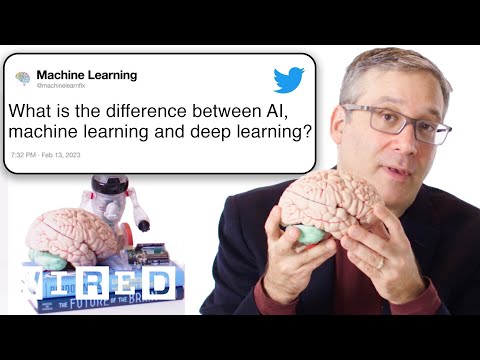
By WIRED AI Expert Answers AI Questions From Twitter Tech Support WIRED by WIRED
How AI Will Answer Questions We Havent Thought to Ask Aravind Srinivas TED

By TED How AI Will Answer Questions We Havent Thought to Ask Aravind Srinivas TED by TED

Title: AI answers Life's Hardest Questions
Channel: Plan3
AI answers Life's Hardest Questions by Plan3
AI eBook Writer: Write Your Bestseller in Minutes (No Experience Needed!)
Is This AI Answer SHOCKING You? Find Out Now!
The relentless march of technological advancement has, for a considerable time, been reshaping the contours of our world, and artificial intelligence now occupies a particularly prominent position. Within this rapidly evolving sphere, the proliferation of AI-powered tools capable of generating text, images, code, and a plethora of other outputs has sparked both fascination and apprehension. It is this very landscape, where the boundaries between human creation and machine-generated content blur, that we will explore. Specifically, we will examine the capabilities of modern AI, their implications, and the impact they're already having on various facets of our lives, including the very essence of information itself. Buckle up, as the insights might just surprise you.
The Dawn of a New Era: AI's Expansive Reach
The ability of AI to generate text, answering queries, writing stories, and even composing poetry, is a watershed moment. Consider the complex algorithms and neural networks that underpin these systems. They’re trained on vast datasets, enabling them to identify patterns, learn relationships, and ultimately, produce coherent and often compelling content. It’s a far cry from early attempts at automated text generation, representing a leap forward in sophistication and understanding. Whether for crafting marketing copy, drafting technical documentation, or even assisting in creative writing, the applications are rapidly expanding. But where did all of this begin and where do we see it going?
Unveiling the Mechanisms: How AI Crafts Answers
At the heart of these sophisticated systems lies a complex interplay of machine learning, natural language processing, and deep learning. These technologies allow AI to analyze inputs, interpret nuances, and construct responses that are contextually relevant and often indistinguishable from human-written content. These models are not merely regurgitating pre-programmed information; instead, they are synthesizing knowledge, drawing inferences, and adapting to the specific parameters of each prompt or query. The sheer scale of the datasets used in training these models is staggering, reflecting the vast computational power required to achieve such feats. This process fuels the AI's capacity to learn and improve. The implications are profound; systems can generate complex answers, translate languages, and even summarize lengthy texts.
Decoding the Capabilities: A Deep Dive into AI's Arsenal
The range of capabilities demonstrated by AI systems is nothing short of astonishing. They can engage in multi-turn conversations, provide detailed explanations, and even mimic distinct writing styles based on provided parameters. For example, AI can create different types of content for numerous purposes. Consider the role of AI in various areas, from helping with essay writing to providing instructions for a complex task. As these systems evolve, they are becoming increasingly adept at understanding context, subtleties, and the underlying intentions behind human communication. Imagine the possibility of tailored education, healthcare, and creative endeavors. These developments raise significant questions about the future of several industries.
The Shocking Reality: Unveiling the Potential of AI
Perhaps the most immediately striking aspect of AI is its ability to generate content that can be surprisingly convincing, even deceptive. AI can now mimic human voices, in turn creating deepfakes and other fabricated content that can be difficult to distinguish from the real thing. AI's capacity to generate personalized content, whether it’s in the form of product recommendations, news articles, or even social media posts, fuels the spread of information, and the potential for misuse is undeniable. This requires careful consideration of the ethical implications of AI and the need for robust safeguards to protect against its potential harms.
Weighing the Societal Impact: Beyond the Surface
The rise of AI has far-reaching implications for our society, forcing us to grapple with fundamental questions about employment, education, and the very nature of truth. As AI-powered systems automate tasks previously performed by humans, the workforce is likely to experience major shifts. It is critical for us to anticipate and plan for these changes. The skills gap has widened, and the demand for workers with AI-related expertise is on the rise. Education systems must adapt to equip individuals with the skills they need to thrive in the AI-driven economy.
Navigating the Ethical Minefield: Responsible AI Development
The development and deployment of artificial intelligence necessitate a responsible approach that prioritizes ethical considerations. Bias in datasets can lead to unfair outcomes, while the potential for misuse requires strict oversight. Developing and adhering to ethical guidelines, promoting transparency, and fostering a culture of accountability. Robust regulations are necessary to prevent the exploitation of AI, to protect human rights, and to ensure that AI is used for the benefit of all.
Preparing for the Future: Adapting to the AI Revolution
The future is undeniably intertwined with artificial intelligence. By embracing a proactive and forward-thinking approach, we can navigate the challenges and capitalize on the opportunities that lie ahead. Investing in education and skills development is crucial, as is fostering a culture of lifelong learning. Staying informed about the latest developments in AI and engaging in open dialogue about its implications are also essential. Preparing for the future requires collaboration, innovation, and a shared commitment to building a more equitable world.
Your Questions Answered: Addressing Common Concerns
Many questions are raised by developments regarding AI. Are AI-generated answers reliable? How does AI affect privacy? Can AI be used for malicious purposes? Can AI generate creative works? The answers to these questions are nuanced, offering a glimpse of the complexities involved. Accuracy depends on various factors, including the quality of the training data and the sophistication of the algorithms. AI’s impact on privacy is substantial. Malicious entities could potentially use AI to generate disinformation on a large scale. While it might be difficult to determine what is or is not AI-generated, AI is a tool.
The Final Word: Embracing the Future
The age of AI is upon us, and it is reshaping our world. By understanding its capabilities, recognizing its limitations, and addressing its ethical implications, we can harness its power for the benefit of all. The future of AI is not predetermined. With careful planning and responsible stewardship, we can shape its trajectory.
